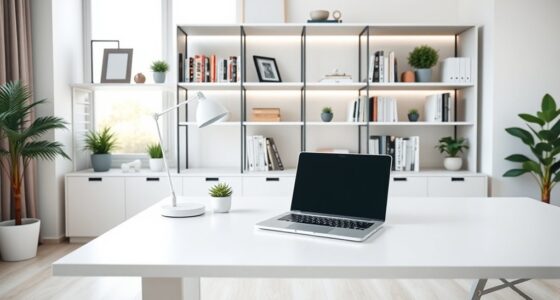

The minimalist workspace is here to stay, reflecting a shift toward healthier, more functional designs that boost productivity and well-being. It’s not just about looks but about creating ergonomic, clutter-free environments that support focus and reduce stress. This trend aligns with broader cultural values like sustainability and mindfulness, making it a lasting transformation rather than a passing fad. Keep exploring to discover how these changes can positively impact your work environment.
Key Takeaways
- Minimalist workspaces prioritize ergonomic design, supporting health and comfort, indicating a lasting shift rather than a passing trend.
- The focus on sustainable, durable furniture and clutter reduction aligns with broader environmental and cultural values.
- Color psychology in minimalist setups enhances productivity and well-being, reinforcing their continued relevance.
- The integration of minimalism with remote and hybrid work models suggests its ongoing importance in modern workplaces.
- Minimalism’s emphasis on order, focus, and health makes it a fundamental transformation in workspace design, not just a fleeting fad.

Is minimalism in the workspace just a passing trend or a genuine transformation in how we work? You might wonder if the sleek, clutter-free environments are here to stay or simply a fleeting fad. The truth is, minimalism isn’t just about aesthetics; it’s rooted in creating functional, health-conscious spaces that boost productivity and well-being. One key element driving its staying power is ergonomic design. When your workspace is minimalist, every piece of furniture and accessory is carefully selected to support your posture and comfort. You’re less likely to experience strain or fatigue, which means fewer breaks and more focused work sessions. For example, a clean desk with an ergonomic chair and a properly positioned monitor reduces neck and back pain, helping you stay comfortable throughout the day. This focus on ergonomics isn’t just a passing trend; it represents a shift toward healthier work environments, especially as remote and hybrid work models become more common. Additionally, the emphasis on load‑planning tools helps individuals optimize their workspace setup for maximum efficiency and safety.
Color psychology also plays a significant role in the appeal of minimalist workspaces. With fewer distractions and a streamlined palette, you can choose colors that evoke calm, focus, or creativity. Soft neutrals like beige, gray, or muted blues help create a tranquil atmosphere, reducing stress and mental clutter. Conversely, if you want to energize your space, adding pops of bold color strategically can stimulate motivation without overwhelming the senses. The thoughtful use of color psychology in minimalist design isn’t arbitrary; it’s backed by research showing how colors influence mood and productivity. When your workspace is intentionally designed with these principles, it reinforces a sense of order and clarity, making it easier to concentrate and feel in control of your work environment.
Furthermore, minimalism aligns with broader cultural shifts emphasizing sustainability and mindfulness. Less clutter means less material waste and a lower environmental footprint, which resonates with those seeking eco-friendly solutions. It also encourages you to focus on quality over quantity—investing in durable furniture and meaningful decor rather than excess. This mindset fosters a more intentional approach to how you work and live, reinforcing the idea that minimalism isn’t just a style but a lifestyle choice with lasting benefits.

DUMOS Criss Cross Chair Legged Office Wide Comfy Desk Seat, No Wheels Armless Computer Task Seating, Swivel Vanity Home Height Adjustable
Simple & Stylish: Featuring a channel-tufted design, this fashionable and on-trend chair eliminates unnecessary accessories and parts, embodying…
As an affiliate, we earn on qualifying purchases.
As an affiliate, we earn on qualifying purchases.
Frequently Asked Questions
How Does Minimalist Design Impact Employee Productivity?
Minimalist design boosts your productivity by creating a clutter-free environment that minimizes distractions. Its ergonomic benefits guarantee you stay comfortable and focused, reducing fatigue. Plus, the aesthetic appeal of a clean, simple space can enhance your mood and motivation. When your workspace is streamlined, you can concentrate better, work efficiently, and feel more organized, making minimalist design a practical choice for long-term productivity improvements.
What Are Common Challenges in Maintaining a Minimalist Workspace?
You might find that clutter accumulation becomes a challenge in maintaining a minimalist workspace, as it can quickly undermine the clean, organized look. Balancing personal expression while keeping surfaces clear requires discipline and intentionality. You’ll need to regularly declutter and set boundaries for what items are essential. By doing so, you preserve the minimalist aesthetic and create a calm environment that boosts focus and productivity.
Is Minimalism Suitable for All Industries and Business Sizes?
Is minimalism suitable for all industries and business sizes? You might wonder if it’s adaptable, and the answer is yes—minimalism can boost industry adaptability and support business scalability. Smaller startups thrive with clean, focused spaces, while larger corporations can use minimalist design to promote clarity and efficiency. The key is tailoring the approach to fit your industry needs and growth goals, making minimalism a practical choice across diverse business environments.
How Does Technology Integration Influence Minimalist Office Design?
Technology integration substantially influences minimalist office design by enhancing digital workspace efficiency without clutter. You can streamline technology aesthetics with sleek, hidden cables and wireless devices, creating a clean, organized environment. This approach promotes focus and productivity, aligning with minimalist principles. As you incorporate smart tools and seamless connectivity, your workspace remains functional and modern, demonstrating that technology supports, rather than disrupts, minimalist design’s simplicity and clarity.
What Are the Cost Implications of Adopting a Minimalist Workspace?
Think of switching to a minimalist workspace like decluttering your closet—initial costs may seem high, but the long-term savings are worth it. You’ll reduce expenses on unnecessary furniture and décor, leading to significant cost savings. Plus, space efficiency means you need less square footage, cutting rental or maintenance costs. Overall, adopting a minimalist approach can streamline your expenses and boost productivity, making it a smart investment for your business.

Kutesna 15 PCS Interlocking Desk Drawer Organizer Separator for Office,Bathroom,Kitchen,Makeup(Black)
【MULTI-PURPOSE STORAGE】15 Pcs customizable drawer bins include 3 large,6 medium and 6 small trays.It’s easy to find a…
As an affiliate, we earn on qualifying purchases.
As an affiliate, we earn on qualifying purchases.
Conclusion
As you consider your workspace, remember that a recent survey found 65% of professionals feel that minimalist designs boost productivity and reduce stress. Whether this trend is a passing phase or a lasting transformation depends on how you adapt to these changes. Embracing simplicity can create a more focused and calming environment, helping you stay efficient. So, will you stick with minimalism or stick to the old ways? The choice is yours—this movement is more than just a trend.

OffiGo U Shaped Electric Standing Desk with Drawers, 55 Inch Height Adjustable Desk with Keyboard Tray & Ergonomic Monitor Stand, Sit Stand Table with Power Outlets for Home, Office, Black
Extra Usage Space: This OffiGo U-shaped standing desk features a 2-corner design that provides 15% more workspace than…
As an affiliate, we earn on qualifying purchases.
As an affiliate, we earn on qualifying purchases.

Positive Mental Health Office Decor Rustic Desk Decor Therapy Office School Counselor CBT Therapist Counseling Wood Sign Psychology Decoration for Home Farmhouse Table Shelf Plaque with Wood Stand
PRODUCT INCLUDES: 1PCS Wood Sign (3.94 x 3.94 inches) + 2PCS Wooden Stand (The wooden sign base is…
As an affiliate, we earn on qualifying purchases.
As an affiliate, we earn on qualifying purchases.