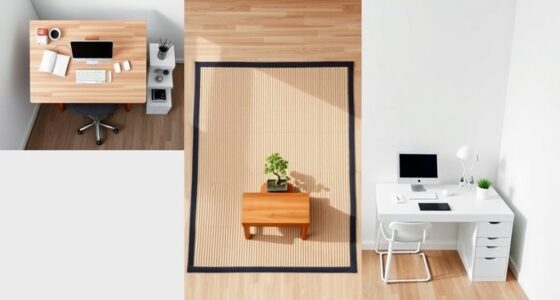
When your workspace is thoughtfully designed, it influences how you perceive your environment, making you feel safer, more comfortable, and in control. Clear layouts, good lighting, and organized spaces reduce stress and boost confidence, helping you focus and be more productive. When you genuinely love your office, your brain perceives it as inviting and stimulating, which enhances your well-being and work performance. Keep going to discover how these design elements shape your daily success.
Key Takeaways
- Well-designed, organized spaces reduce stress and enhance comfort, boosting productivity and positive feelings at work.
- Spaces that offer control and customization increase perceived safety and engagement among employees.
- Thoughtfully planned layouts promote social interaction, collaboration, and a sense of community.
- Environments perceived as safe and stimulating support mental well-being and overall mood.
- Aesthetically pleasing, functional offices align with the brain’s perception, encouraging motivation and better work habits.
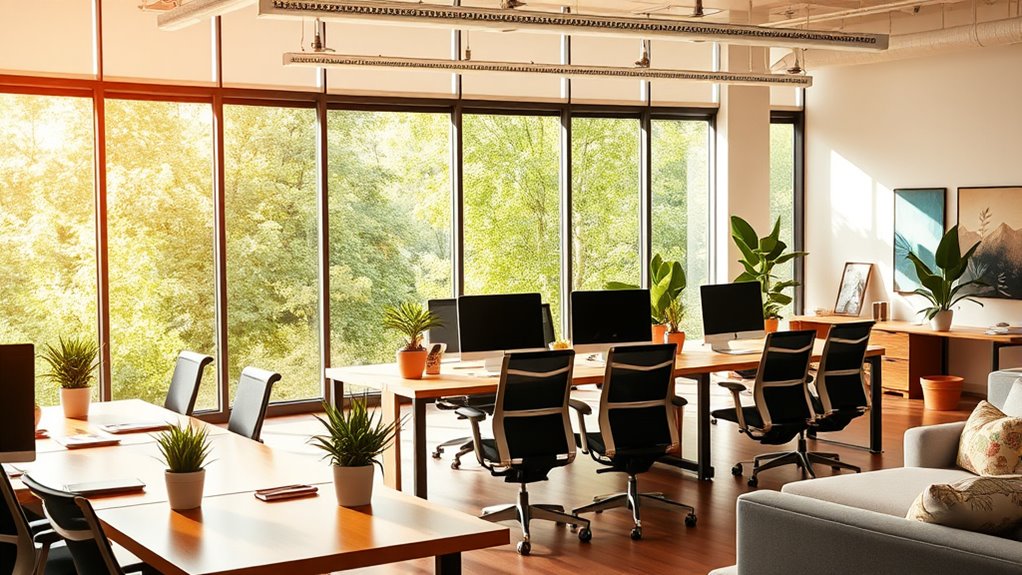
Have you ever wondered how humans mentally adapt to the extreme environment of space? While space is vastly different from our Earthly surroundings, the way we perceive and interact with our environment plays a crucial role in maintaining mental well-being. On Earth, especially in an office environment, your spatial perception influences your comfort, productivity, and overall mood. Recognizing this connection can help you understand why designing a workspace you love isn’t just about aesthetics—it’s about how your mind perceives and navigates that space.
In an office environment, your spatial perception shapes your experience daily. When your workspace is cluttered, poorly lit, or feels cramped, your brain perceives it as uncomfortable or even stressful. This perception triggers subconscious responses—like increased anxiety or distraction—that hamper your ability to focus and perform. Conversely, a thoughtfully designed office enhances spatial perception by creating an open, organized, and inviting atmosphere. When your surroundings feel balanced and predictable, your brain perceives the space as safe and manageable, boosting confidence and efficiency.
The way you perceive space influences your sense of control. An office that offers clear pathways, designated zones for work and relaxation, and adjustable elements helps reinforce a feeling of mastery over your environment. When you can easily find what you need or adjust your workspace to suit your preferences, your brain registers this as a positive experience. This sense of control reduces stress and promotes engagement, making it easier to concentrate and be productive.
Furthermore, spatial perception impacts your social interactions within the office. A well-designed layout fosters collaboration and communication, which are essential for a positive work atmosphere. When colleagues can see and approach each other easily, it creates a sense of community and trust. On the other hand, poorly planned spaces can lead to feelings of isolation or territoriality, disrupting teamwork and lowering morale.
Understanding how your brain interprets space helps you appreciate the importance of a workspace that aligns with your needs. It’s not just about personal taste but about creating an environment that your mind perceives as comfortable, safe, and stimulating. Recognizing that the brain’s perception of space influences your overall well-being can motivate you to prioritize thoughtful design. The better your spatial perception aligns with your work style and personality, the more motivated and focused you’ll feel. Ultimately, designing or choosing an office environment that enhances your spatial perception isn’t just about aesthetics—it’s a essential factor in helping you work better and feel more at home in your workspace.
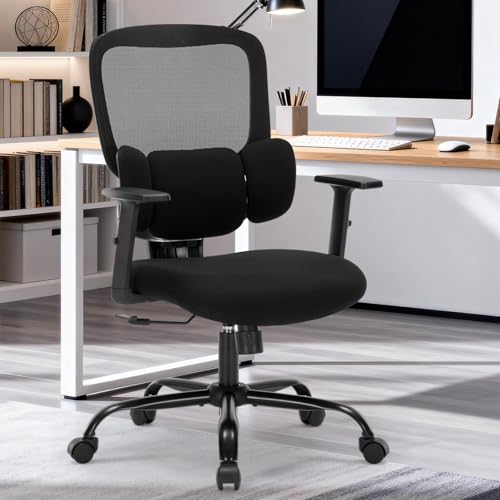
Ergonomic Office Chair, Ergonomic Desk Chair with Adjustable Height, Lumbar Support, High Back Mesh Support with Adjustable Armrests, Task Chairs for Home Office Computer
【Ergonomic Office Chair】- Our meticulously designed mesh office chair prioritizes ergonomics, ensuring optimal support for your body's natural…
As an affiliate, we earn on qualifying purchases.
As an affiliate, we earn on qualifying purchases.
Frequently Asked Questions
How Does Natural Light Influence Employee Productivity?
Natural light substantially boosts your productivity by positively influencing your mood and energy levels. Sunlight effects your circadian rhythm, helping you stay alert and focused. By optimizing daylight in your workspace, you can reduce eye strain and improve overall well-being. When your office maximizes sunlight exposure, you stay motivated and engaged, leading to better work outcomes. Embracing daylight optimization creates a healthier, more inspiring environment for you to thrive.
What Role Does Color Psychology Play in Office Design?
Color psychology plays a crucial role in office design by influencing your mood and productivity through color symbolism and hue impact. Bright colors like yellow boost creativity, while calming blues reduce stress. You can strategically choose hues to foster focus or relaxation, creating an environment that enhances performance. By understanding how color symbolism affects emotions, you can design an office space that motivates you and supports your work style effectively.
Can Personalized Workspace Elements Improve Well-Being?
Think of your workspace as a garden that you nurture; personalized elements act like sunlight, boosting your well-being. Personalization benefits include creating a strong workspace identity, making you feel more comfortable and connected. When you add your favorite photos, colors, or objects, you take ownership of your space, which can reduce stress and increase productivity. Ultimately, a personalized workspace helps you feel happier and more motivated every day.
How Does Noise Level Affect Concentration and Stress?
High noise levels can disrupt your focus and increase stress. Sound masking helps by reducing distracting sounds, creating a more consistent auditory environment. Noise canceling headphones actively block out background noise, allowing you to concentrate better and stay calm. By managing noise effectively, you’ll find it easier to stay productive and feel less overwhelmed, especially in busy office settings where external sounds can easily break your concentration.
What Ergonomic Features Boost Comfort and Efficiency?
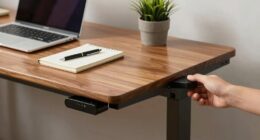
Think of your workspace as a finely tuned instrument. Ergonomic seating supports your posture, reducing strain and boosting comfort, while adjustable desks let you switch between sitting and standing effortlessly. These features act like the gears of a well-oiled machine, enhancing your efficiency and well-being. By integrating ergonomic design, you create a comfortable environment that fuels productivity and keeps you focused throughout the day.

caktraie Makeup Organizer Storage with 16 Drawers, 4 Pcs Desktop Office Supplies, Desk Organizers, Clear Accessories, Dustproof Storage Drawer and for Make Up, Jewelry, Pen, Stationary
4 Pack Desk Organizers with 16 Drawers – This Maximize space on shelves, dressers ,under the sink,and bathroom…
As an affiliate, we earn on qualifying purchases.
As an affiliate, we earn on qualifying purchases.
Conclusion
When you create a workspace you love, it becomes your sanctuary, fueling your creativity like a spark igniting a fire. Your environment shapes how you feel and perform, turning your daily grind into a dance rather than a chore. So, fill your office with what inspires you—colors, comfort, and purpose—and watch your productivity blossom like a garden in full bloom. Your ideal space isn’t just a place; it’s the secret ingredient to revealing your best work.

Pzloz Led Desk Lamp for Office Home – Eye Caring Architect lamp with Clamp,Dual Screen Computer Monitor Work Smart Light: 24W 5 Color Flexible Adjustable Lighting Table Lamp for Study Drafting
Versatile Lighting Options: This LED desk lamp offers 25 light combination modes with 5 color temperatures (3000K-5500K) and…
As an affiliate, we earn on qualifying purchases.
As an affiliate, we earn on qualifying purchases.

VIVO L-Shape Modular Corner Wall System, 3 Panels, Modern Professional Office Cubicle Dividers, Freestanding Privacy Screen, 66 inches High, Dark Gray, PP-MWS63D-L
Freestanding L-Shaped Privacy Panels: Create instant room division with a modern 3 PET panel design (75.6”L x 38.5”D…
As an affiliate, we earn on qualifying purchases.
As an affiliate, we earn on qualifying purchases.