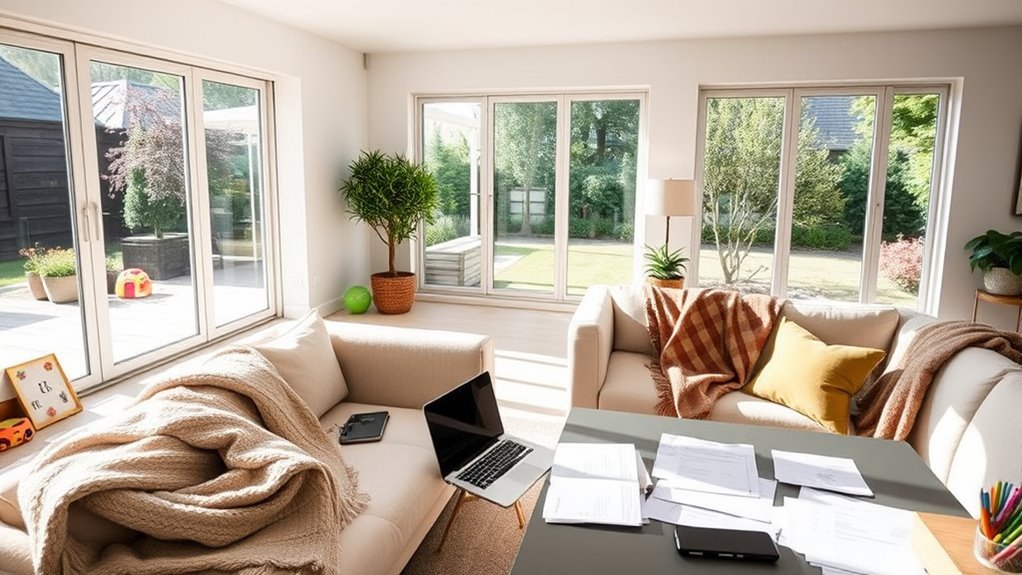

Working from home has permanently changed how your living space functions, blending work and leisure into one environment. You now need to design multifunctional areas with dedicated zones, ergonomic furniture, and good lighting to boost focus and comfort. Establishing boundaries using physical cues and digital tools helps prevent work from overtaking personal time. This shift requires intentional space planning and discipline, making your home a better balance of productivity and relaxation. Keep exploring to discover ways to optimize your space further.
Key Takeaways
- Living spaces now serve dual purposes, requiring designated zones for work and leisure to maintain clarity and productivity.
- Home office design emphasizes ergonomics and organization to reduce distractions and promote mental well-being.
- Digital tools and routines help establish boundaries, preventing work from encroaching on personal time.
- Physical signals like closed doors and technology settings reinforce the separation between work and home life.
- Thoughtful environment modifications support work-life balance, reducing stress and enhancing overall well-being.

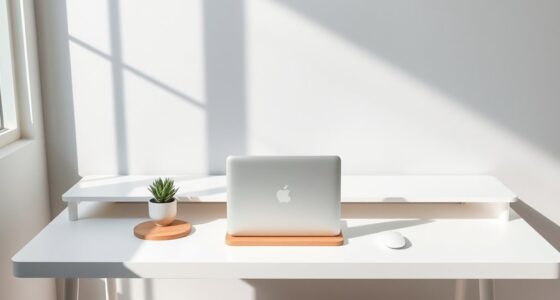
In today’s fast-paced world, the line between work and personal life has become increasingly blurry, often overlapping in ways that can both benefit and strain you. As more people work from home, your living space is transforming into a multifunctional environment, where comfort and efficiency must coexist. The way you design your office space plays a vital role in maintaining productivity and mental clarity. A well-thought-out office design can help separate your work from leisure, even within the same room, reducing distractions and creating a dedicated zone for business activities. You might incorporate ergonomic furniture, proper lighting, and organized storage to foster focus and comfort. These adjustments not only boost your productivity but also help create a psychological boundary, signaling to your mind when it’s time to work versus unwind. Incorporating principles of environmental psychology can further optimize your space for mental well-being and focus.
Alongside physical space, productivity tools have become essential in managing this blurred boundary. Software applications, task managers, and digital calendars keep you organized and focused amid the chaos of overlapping roles. You can set specific work hours and use reminders to stay on track, ensuring work doesn’t spill over into your personal time unintentionally. These tools also facilitate communication and collaboration, especially when you’re working remotely with colleagues or clients, making it easier to stay connected without feeling overwhelmed. By integrating effective productivity tools into your routine, you establish a rhythm that respects both your professional commitments and personal needs.
However, creating this balance isn’t just about physical space and tools. It requires intentional boundaries and discipline. You might find it helpful to designate certain areas in your home solely for work, such as a corner of your living room or a spare room converted into an office. When work hours end, closing the door or shutting down your computer signals a shift back into personal life. Similarly, leveraging productivity tools to set boundaries—like muting notifications outside work hours—can reinforce those limits. The challenge lies in resisting the temptation to check emails or finish tasks late into the evening, which can erode the separation between work and home life over time.
Ultimately, your home’s design and the technology you employ shape your experience of work-life balance. When approached thoughtfully, these elements can help you navigate the work-from-home landscape more smoothly, allowing you to enjoy the benefits of flexibility while minimizing stress. The key is to be deliberate—craft a workspace that promotes focus, use tools that support your goals, and respect the boundaries that keep your personal life intact. This way, the work-life blur becomes a manageable, even enriching, aspect of your everyday routine.
Top picks for "work life blur"
Open Amazon search results for this keyword.
As an affiliate, we earn on qualifying purchases.
Frequently Asked Questions
How Has Remote Work Impacted Household Energy Consumption?
Remote work has increased your household energy consumption as you spend more time at home. This leads to higher utility bills because you’re using more electricity for lighting, heating, cooling, and electronic devices. To improve energy efficiency, you can adopt energy-saving habits, upgrade appliances, and optimize your home’s insulation. These steps help lower utility bills and reduce your environmental impact while maintaining a comfortable living space.
What Are the Best Ways to Create Boundaries Between Work and Home?
To create boundaries between work and home, set up a dedicated home office where you can focus. Clearly define your work hours and communicate them to others. Use physical cues like closing the door or turning off work notifications outside those hours. Establish personal boundaries by avoiding work tasks during your personal time, helping you switch off and maintain a healthy balance between your professional and personal life.
How Do Different Living Spaces Adapt to Remote Work Requirements?
They say “necessity is the mother of invention,” and your living space adapts by optimizing Home Office Design and Storage Solutions. You might carve out a dedicated corner or transform a spare room for work, ensuring a clear boundary. Using smart storage keeps clutter at bay, making your space functional and stress-free. Flexibility is key; adapt your layout to suit your work needs while maintaining a comfortable living environment.
What Mental Health Challenges Are Associated With Working From Home?
Working from home can increase your work-related anxiety and social isolation. You might feel overwhelmed by the lack of clear boundaries, making it hard to disconnect. Social isolation can lead to loneliness and affect your mental well-being. To combat this, set a routine, take regular breaks, and stay connected with colleagues and friends. Prioritizing self-care helps manage these mental health challenges and maintains your overall well-being.
How Has Remote Work Influenced Neighborhood Community Interactions?
Remote work has boosted neighborly interactions by making you more available for casual chats and spontaneous help. You’re more likely to attend community events or organize neighborhood activities, strengthening bonds. This shift encourages a sense of belonging and trust within your area. As you spend more time at home, you naturally engage more with neighbors, fostering a vibrant, supportive community that thrives on regular interactions and shared experiences.
Conclusion
As you’ve seen, working from home has transformed your living space into a flexible arena where boundaries blur. Maybe your kitchen table now doubles as your office, like a chameleon adapting to different environments. Just as a river reshapes its banks over time, your home has evolved to accommodate your work and life seamlessly. Embrace this new fluidity—it’s not just a change, but an opportunity to create a space that truly supports your whole self.