
Owning less helps reduce stress by creating a calm, organized space that promotes mental clarity and emotional balance. When you declutter, you cut down on subconscious stress and decision fatigue, making it easier to focus and relax. A tidy environment boosts your overall well-being and sense of control. By simplifying your surroundings, you’ll feel more peaceful and centered. Keep exploring how minimalism can transform your mental health and daily life.
Key Takeaways
- Owning less reduces visual clutter, which enhances mental clarity and decreases feelings of overwhelm.
- Minimal possessions lower subconscious stress, promoting relaxation and emotional stability.
- Decluttering creates organized spaces that foster a sense of control and calmness.
- Fewer belongings decrease decision fatigue, making daily choices simpler and less stressful.
- Simplified environments support mental well-being by reducing distractions and supporting mindfulness.

WYT Clear Storage Latch Bins, 6-Pack Storage Organizer Box with Handle and Lids, 5-Litre
IDEAL FOR SMALL AREAS: With dimensions of 11 x 7.7 x 4.6 inches, our clear storage bins are…
As an affiliate, we earn on qualifying purchases.
As an affiliate, we earn on qualifying purchases.
The Psychological Impact of Clutter
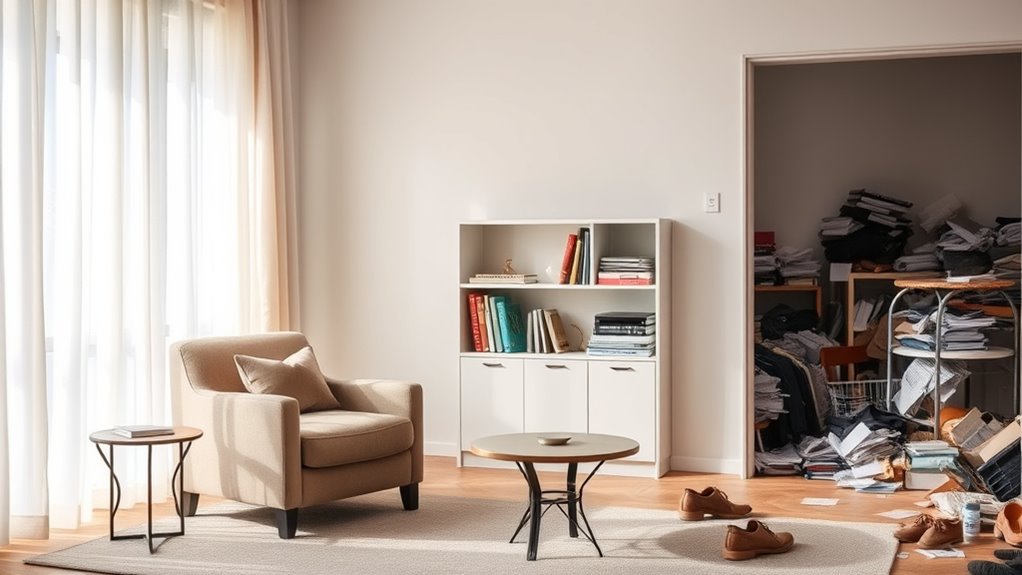
Clutter can considerably affect your mental state, often leading to feelings of stress and overwhelm. When your space is cluttered, you might develop emotional attachments to objects, making it harder to let go. These attachments keep you stuck, making it difficult to prioritize and let go of possessions, fueling indecision and prolonging clutter’s presence. As a result, you face decision fatigue—your mental energy becomes drained from constantly choosing what to keep or discard. This mental exhaustion can impair your ability to focus and make clear choices, increasing feelings of frustration. The chaos around you also triggers subconscious stress responses, making it difficult to relax or feel in control. Over time, clutter’s psychological toll can diminish your overall well-being, trapping you in a cycle of emotional attachment and decision fatigue. Recognizing how clutter impacts your mental health is the first step toward creating a more organized and calm environment. Engaging in decluttering can also help reduce the emotional attachments that contribute to clutter buildup, fostering a healthier mindset. Additionally, understanding how clutter affects your cognitive load can motivate you to develop more effective decluttering strategies. Incorporating functional storage solutions, such as smart planters and organized shelves, can further ease this process by making tidying easier and more sustainable.

SONGMICS Cabinet Organizer Shelf, Set of 2 Kitchen Counter Shelves, Kitchen Storage, Spice Rack, Stackable, Expandable, Metal and Engineered Wood, Ink Black and Natural Beige UKCS02NB
[Plenty of Storage] Keep your cooking essentials, such as spice jars, containers, cans, cutlery, and cookbooks organized, easily…
As an affiliate, we earn on qualifying purchases.
As an affiliate, we earn on qualifying purchases.
How Minimalism Promotes Mental Clarity
When you reduce clutter and embrace minimalism, your mind begins to clear. With fewer distractions, your visual focus sharpens, making it easier to concentrate on what truly matters. This clarity helps you prioritize tasks and goals, creating a sense of control. As visual noise diminishes, your emotional balance improves because you feel less overwhelmed and more centered. Minimalism removes the chaos that often fuels stress, allowing your thoughts to flow smoothly. By simplifying your environment, you create mental space for reflection and calmness. This mental clarity enhances your overall well-being, fostering resilience against daily stressors. When your surroundings are streamlined, your mind naturally becomes more peaceful, letting you experience a greater sense of harmony and emotional stability. Incorporating mindful decluttering practices can further support your journey toward mental clarity and emotional well-being. Additionally, understanding battery technologies can help you choose sustainable and efficient solutions to support your minimalist lifestyle. Embracing secure and reliable merchant services can also reduce financial stress by streamlining your transactions and safeguarding your resources.

Vivihomety Utility Slim Storage Cart with Wheels, 4 Tier Small Rolling Cart with Wood Top, Metal Kitchen Bathroom Laundry Room Organization Trolley with Handle for Narrow Space – Black
Stylish Wood & Metal Combo: The attractive wood top paired with matte black alloy steel brings an industrial…
As an affiliate, we earn on qualifying purchases.
As an affiliate, we earn on qualifying purchases.
Physical Health Benefits of Decluttering
Decluttering your space can considerably improve your physical health by reducing the risk of allergies and respiratory issues. When you clear out dust, mold, and allergens from cluttered areas, you breathe easier and lower your chances of asthma or other breathing problems. Decluttering also encourages healthier habits, like organizing items for organ donation, which reduces clutter and promotes sustainability. Additionally, a tidy space makes it easier to establish and stick to fitness routines, as you won’t be overwhelmed by chaos. Less clutter means fewer obstacles to moving freely and comfortably at home. By maintaining a clean environment, you support better sleep, reduce stress-related health concerns, and create a space that nurtures your overall physical well-being. Incorporating data privacy and safety practices when organizing digital and physical items can further enhance your health and peace of mind, especially as AI technology becomes more integrated into daily life. Being mindful of clutter management can also help prevent accidental injuries caused by tripping over misplaced items.

Aheaplus Closet System, Closet Organizer with 3 Wooden Drawers, Closet Organizer System, Walk-in Closet Wardrobe Clothes Rack with 4 Hanging Rods, Garment Rack, -4R, White
【Stylish Wall-Mounted Closet System with 3 Drawers】Equipped with 3 wooden drawers which are durable, unlike other’s fabric drawers…
As an affiliate, we earn on qualifying purchases.
As an affiliate, we earn on qualifying purchases.
Creating a Stress-Reducing Environment
Creating a stress-reducing environment starts with intentionally designing your space to promote calm and relaxation. Focus on decor and ambiance that evoke tranquility—soothing colors, soft lighting, and simple decor choices help create a peaceful atmosphere. Keep your space organized by prioritizing storage aesthetics; attractive storage solutions hide clutter and maintain visual harmony. Clear surfaces and well-designed storage not only look appealing but also reduce mental clutter, making your environment feel more spacious and calming. Avoid overcrowding your space with unnecessary items, which can increase stress. Instead, curate your decor to reflect simplicity and purpose. Incorporating positive thinking into your daily environment can further enhance feelings of calm and optimism. When you understand how pregnancy can affect your mental and physical state, you can better tailor your environment to support your well-being. Being mindful of mental clutter enables you to create a more intentional and peaceful space. Additionally, incorporating minimalist design principles can help streamline your surroundings and promote a sense of order. Practicing mindful organization can further enhance the calming effect of your space. By thoughtfully arranging your environment with calming decor and aesthetic storage, you foster a space that naturally encourages relaxation and mental clarity.
The Connection Between Organization and Relaxation
When your space is organized, your mind feels less overwhelmed and more at ease. Less clutter means you can relax without constant distractions or visual noise. A clear environment helps you find calm and focus, making relaxation easier to achieve. Implementing simple systems can also help maintain this sense of order and peace over time. For example, incorporating functional storage solutions like baskets and bins can keep your belongings neatly contained, reducing visual chaos. Additionally, an organized space can facilitate mindfulness practices, enhancing your overall sense of well-being and reducing stress levels. Understanding the benefits of cost-effective solutions for managing your space can further motivate you to create a clutter-free environment that promotes relaxation. Embracing Italian-inspired organization techniques, such as using elegant containers inspired by Italian cuisine, can add a touch of sophistication while maintaining order.
Clear Spaces, Clear Mind
A tidy space can do wonders for your mental clarity, making it easier to relax and focus. When your environment is organized, you naturally engage in mindful consumption, choosing only what truly adds value to your life. Clutter psychology shows that excess possessions can trigger subconscious stress, making it harder to unwind. Clearing your space reduces visual distractions, allowing your mind to settle. By maintaining order, you create a calming atmosphere that fosters relaxation and mental well-being. You’ll find it easier to concentrate, breathe deeply, and feel at peace. Simple organization not only improves your environment but also nurtures a clearer, more relaxed state of mind, proving that less clutter truly equals more calm. Incorporating minimalist principles can further enhance the benefits of decluttering and promote long-term tranquility.
Less Clutter, More Calm
Organizing your space not only clears physical clutter but also directly impacts your sense of calm. When your environment is tidy, you create room for relaxation and mental clarity. Less clutter means fewer distractions, making it easier to enjoy a digital detox and focus on what truly matters. Imagine a serene living area where everything has its place: Privacy Policy and cookie management help protect your personal information while you declutter. Additionally, decluttering can improve your mental health by reducing feelings of stress and overwhelm. Incorporating calming sound vibrations into your routine can further enhance this sense of tranquility.
Strategies for Effective Decluttering

To keep clutter at bay, make daily organization a habit; small, consistent efforts add up over time. Use storage solutions thoughtfully to maximize space and keep things accessible. When you prioritize these strategies, decluttering becomes more manageable and helps boost your well-being.
Prioritize Daily Organization
Have you ever felt overwhelmed by the clutter piling up around you? Prioritizing daily organization helps you stay on top of tidiness and reduces stress. Start each day with a quick decluttering routine—set a timer for five minutes to clear surfaces or put away stray items. Incorporate a digital detox by limiting screen time during these moments; it keeps your focus sharp and prevents digital clutter from adding to physical chaos. Maintaining a tidy space also supports social connectivity, as you’re more likely to invite friends over or engage confidently online. Small, consistent efforts prevent clutter from becoming overwhelming. Remember, daily organization isn’t about perfection but about creating a manageable routine that keeps your environment calm and your mind clear.
Use Storage Solutions Wisely
Using storage solutions wisely is essential for effective decluttering because they help keep your belongings organized and accessible. Smart storage transforms chaos into order, making daily routines smoother. Focus on creating clutter zones—designated areas for specific items—so everything has a home. To visualize this, imagine:
- A labeled bin for craft supplies
- A dedicated drawer for keys and essentials
- Shelves neatly holding books and decor
- Under-bed storage for seasonal items
The Role of Mindfulness in Managing Possessions
Mindfulness plays a crucial role in how you manage your possessions by helping you become more aware of your relationship with clutter. When you practice mindful possession, you pause before acquiring new items, considering whether they truly add value to your life. This awareness encourages intentional consumption, where every purchase aligns with your needs and values rather than impulse. By staying present, you notice the emotional or habitual triggers that lead to unnecessary accumulation. Regularly reflecting on your possessions helps you differentiate between what serves you and what simply takes up space. Over time, this mindful approach fosters a more intentional relationship with your belongings, reducing clutter and stress. Ultimately, mindfulness empowers you to create a calmer, more organized environment that supports your well-being.
Building Confidence Through Simplification
When you start simplifying your possessions, you immediately notice how much lighter and more in control you feel. This process naturally builds your confidence, as each decision to let go affirms your ability to make choices aligned with your values. You begin to trust your judgment more, boosting your self-confidence. As clutter decreases, your environment becomes clearer, and your mind sharper. Visualize a space where:
- Items are purposeful, not just occupying space
- You easily find what you need
- Your daily routines are smoother
- You feel calmer and more focused
These small wins reinforce your decision-making skills, making future choices easier. Simplification transforms your mindset, empowering you to trust yourself more and approach challenges with greater assurance.
Long-Term Benefits of Living With Less
Living with less can clear your mind and boost your mental clarity over time. It also helps you save money and reduce clutter in your physical space, making daily life easier. These long-term benefits can substantially improve your overall well-being and quality of life.
Increased Mental Clarity
As you reduce clutter in your environment, your mind naturally becomes clearer over time. This increased mental clarity allows you to focus better and make decisions with greater ease. With less distraction, you can engage more fully in mindfulness practices that deepen your mental health awareness. You might notice a calmer state of mind, like:
- A clear, open space that invites reflection
- Fewer interruptions, making concentration easier
- Enhanced ability to prioritize tasks effectively
- A sense of calm that persists throughout your day
Living with less creates room for mental clarity, helping you stay present and centered. Over time, this clarity supports your overall well-being, reinforcing the benefits of decluttering and simplifying your environment.
Financial Savings Over Time
Reducing clutter in your life can lead to significant financial savings over time. When you own less, you spend less on storage, repairs, and replacements. This streamlines your budget planning and encourages financial discipline. As a result, you can save money for better priorities, like emergencies or investments. Simplifying your belongings also reduces impulse purchases, helping you stay on track with your financial goals. Here’s a quick comparison:
| Cluttered Lifestyle | Minimalist Lifestyle |
|---|---|
| Higher expenses on storage | Lower expenses, fewer storage needs |
| Frequent buying of duplicates | Buying only essentials |
| Impulse shopping increases | More mindful spending |
| Less financial stress | Greater financial control |
Living with less not only frees your space but also your wallet.
Enhanced Physical Space
By cutting down on clutter, you create more open and functional physical space in your home. This extra room allows your living area to breathe, making it easier to relax and move freely. Removing decorative clutter clears surface areas and highlights your favorite pieces, enhancing the aesthetic appeal of your space. You’ll notice fewer distractions and a calmer environment. Imagine:
- A spacious living room with clear countertops
- Walls free of unnecessary decorations
- Well-organized shelves showcasing meaningful items
- An inviting, uncluttered bedroom for restful nights
With less clutter, your home feels larger and more inviting. The enhanced physical space not only boosts aesthetic appeal but also reduces stress, providing a peaceful environment where you can truly unwind and enjoy your surroundings.
Practical Tips for Maintaining a Clutter-Free Space
Maintaining a clutter-free space requires consistent effort and smart strategies. Establishing regular organizing routines helps prevent clutter from building up. Set aside 10-15 minutes daily to tidy surfaces, sort mail, or put items back in their designated spots. Address decluttering challenges by breaking tasks into smaller steps—tackle one drawer or shelf at a time rather than trying to clear everything at once. Keep a donation bin nearby for items you no longer need, making it easy to let go. Create designated zones for different activities, so everything has a place. Stay mindful of what you bring into your space, asking yourself if it truly adds value. These habits make clutter less overwhelming and help maintain a calm, organized environment.
Frequently Asked Questions
How Does Decluttering Affect Sleep Quality?
Decluttering improves your sleep quality by creating a calm sleep environment, making it easier to relax at bedtime. When your space is tidy, you experience less stress reduction, which helps you fall asleep faster and enjoy deeper rest. Plus, less clutter minimizes distractions and anxiety, allowing your mind to unwind more effectively. Ultimately, a cleaner space promotes healthier sleep habits and a more restful night.
Can Minimalism Improve Work Productivity?
Like a lighthouse guiding ships, minimalism can boost your work productivity. When you embrace digital minimalism and maintain a focused workspace, distractions fade away. You’ll find it easier to prioritize tasks and stay on track, making your work more efficient. Owning less creates clarity, helping you concentrate and accomplish more in less time. So, adopting minimalism isn’t just about space; it’s about revealing your full potential.
What Are Common Emotional Challenges During Decluttering?
You might feel emotional attachment to certain items, making it tough to let go. Decision fatigue can also hit you, as choosing what to keep or discard drains your mental energy. These challenges often lead to feelings of guilt or sadness. To navigate this, take breaks, set clear goals, and remind yourself that decluttering is a step toward a more peaceful space and mind.
How Often Should I Revisit My Organization System?
You should revisit your organization system every three to six months to keep it effective. Regularly assess your storage solutions and organizing routines to guarantee they still meet your needs. This helps prevent clutter from building up again and keeps your space manageable. Make it a habit to review and adjust as necessary, so your system stays functional and stress-free, supporting your overall well-being.
Does Owning Fewer Possessions Save Money Long-Term?
Think of your possessions as a garden; fewer plants mean less maintenance and more space for growth. Owning fewer items saves you money long-term by reducing impulse purchases, storage costs, and replacement expenses. This small change acts as a long-term investment, freeing up your budget for meaningful experiences or savings. Simplifying your belongings helps you build financial resilience, proving that less truly can be more in both life and your wallet.
Conclusion
Living with less can markedly boost your well-being, reducing stress and enhancing clarity. Studies show that clutter can increase cortisol levels by up to 40%, impacting your mood and health. By simplifying your space, you create a calmer, more focused environment that supports relaxation and confidence. Embrace minimalism, and you’ll not only declutter your home but also your mind, paving the way for a happier, healthier life.