

Starting your day with morning pages and a clear desk sets a powerful tone for creativity and focus. Journaling helps you clear your mind, reflect on goals, and find calmness, while organizing your workspace reduces distractions and enhances mental clarity. Together, these habits boost productivity and self-awareness, creating a strong foundation for your day. Keep going, and you’ll discover simple ways to make this routine even more effective for your personal and creative growth.
Key Takeaways
- Starting the day with morning pages boosts mental clarity and sparks creative thinking.
- Clearing your desk reduces distractions, fostering focus and a calm environment for creative work.
- Combining journaling with workspace organization aligns goals and enhances self-awareness.
- Establishing this routine cultivates discipline and sustainable habits for ongoing creativity.
- The integrated practice promotes a proactive mindset, supporting personal growth and innovative ideas.

Starting your day with morning pages and a clear desk can markedly boost your productivity and mental clarity. When you begin your morning with mindfulness journaling, you set a focused tone that helps clear your mind of clutter and distractions. This practice encourages you to put pen to paper and express your thoughts openly, which can reveal underlying stressors or priorities you might not have consciously recognized. As you write, you cultivate a sense of mindfulness that grounds you in the present moment, making it easier to approach your day with intention and calm.
Starting your day with mindfulness journaling clears your mind and sets a focused, calm tone for productivity.
A key part of this routine is workspace organization. When your desk is tidy and free of unnecessary clutter, you create an environment that supports focus and creativity. A clear workspace minimizes the temptation to shift attention to irrelevant tasks or mess, allowing you to dedicate your mental energy to what truly matters. By maintaining an organized desk, you reduce mental overload, which can otherwise hinder your ability to think clearly and make decisions efficiently. The act of tidying up your workspace can also serve as a calming ritual, reinforcing a sense of control and readiness that naturally enhances your productivity.
Incorporating mindfulness journaling into your morning routine helps you stay aligned with your goals. As you write, you can set intentions for the day, prioritize tasks, or simply reflect on your feelings and intentions. This process strengthens your self-awareness and sharpens your focus, making it easier to tackle complex tasks with clarity. When combined with a clean desk, mindfulness journaling becomes more effective, as your environment supports your mental state. You’re less likely to be distracted by clutter and more likely to stay engaged with your writing, which deepens your reflective practice.
Additionally, this routine trains you to develop discipline in both your mental and physical spaces. Over time, the habit of starting with morning pages and a tidy workspace becomes second nature, creating a seamless transition into a productive day. It’s a simple yet powerful way to cultivate mindfulness and organization, which together bolster your creative thinking and problem-solving skills. The combination of journaling and workspace organization doesn’t just clear your mind temporarily; it establishes a sustainable pattern that nurtures your overall well-being and work ethic.
Ultimately, making this routine part of your daily life encourages a proactive mindset. You approach each day with clarity, intention, and a sense of calm—factors that considerably enhance your capacity for creative thinking, productivity, and personal growth. Starting your day with these mindful habits isn’t just about organization or journaling; it’s about setting a foundation for success and fulfillment. Integrating simple systems into your routine can help maintain these habits consistently and effortlessly.

Logitech Z207 2.0 Stereo Computer Speakers with Bluetooth
Versatile setup with speakers that connect easily to computers and other devices via Bluetooth wireless or 3.5mm cable
As an affiliate, we earn on qualifying purchases.
Frequently Asked Questions
How Long Should Each Morning Page Session Last?
You should aim for a writing duration of about 15 to 20 minutes per session. This session length allows you to tap into your creativity without feeling overwhelmed or fatigued. Focus on uninterrupted writing, letting your thoughts flow freely. If you find it helpful, set a timer to keep track of your session length, ensuring consistency and making it easier to incorporate into your morning routine.
Can the Routine Be Adapted for Digital Tools?
Yes, you can adapt this routine for digital tools. Use digital journaling apps or software to jot down your morning pages, making it easy to access your thoughts across devices. Clear your virtual workspace by organizing files and closing unnecessary tabs, just like decluttering a physical desk. This approach keeps your mind focused and encourages creativity while leveraging technology for convenience and flexibility.
What if I Don’t Feel Inspired to Write?
Ever notice how a sudden breeze can spark new ideas? When you don’t feel inspired, try free writing for a few minutes—don’t worry about grammar or structure. Combine this with simple meditation techniques to clear your mind. This coincidence of spontaneous writing and mindful breathing often unleashes creativity, helping you break through blocks and find inspiration naturally. Keep experimenting, and you’ll discover what works best for you.
How Often Should I Refresh My Workspace?
You should refresh your workspace at least once a week to maintain ideal workspace organization. Regular updates help keep your environment tidy, inspiring, and free of clutter that can hinder creativity. Consistent routine maintenance ensures your workspace remains a motivating space, making it easier to start each day with clarity. Set a specific day for tidying, so it becomes a habit that supports your productivity and creative flow.
Are There Specific Journal Types Recommended?
Journals with joyful, jagged pages work wonders for your writing. Opt for a journal that offers quality paper to handle ink and pencil without bleed-through. Choose one that matches your mood, whether it’s a lined, dotted, or blank journal. Consider journals with prompts to spark your creativity or free space for spontaneous scribbles. The perfect journal fuels your focus, fostering a flow of ideas and inspiring your daily dedication.
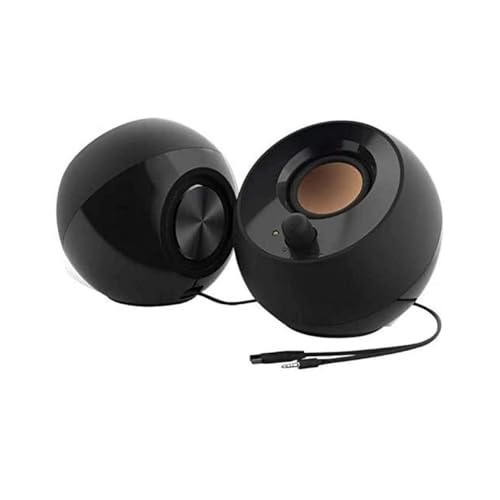
Creative Pebble 2.0 USB-Powered Desktop Speakers with Far-Field Drivers and Passive Radiators for Pcs and Laptops (Black)
Single USB cable for computers and laptops | enjoy a hassle-free Audio experience with a single USB cable...
As an affiliate, we earn on qualifying purchases.
Conclusion
By starting your day with Morning Pages and clearing your desk, you set the stage for creativity to flow—think of it as your personal Renaissance. This simple routine acts like a secret password, unsealing your best ideas before the Wi-Fi even connects. So, take a cue from the greats, ditch the chaos, and embrace this timeless habit. After all, your future self will thank you for this modern-day act of artistic rebellion.

Computer Speakers for Desktop PC Monitor, USB Plug-in, Wired, Computer Soundbar for PC, Laptop Speakers with Adaptive-Channel-Switching, Loud Sound, Deep Bass, USB C Adapter, Easy to Clip on Monitor
[COMPATIBLE WITH USB DEVICES] - Our USB Speakers are compatible with Windows, macOS, ChromeOS, and Linux, making them...
As an affiliate, we earn on qualifying purchases.

Amazon Basics Stereo 2.0 Speakers for PC or Laptop with Volume Control, 3.5mm Aux Input, USB-Powered, 1 Pair, Black
External computer speaker in Black (set of 2) for amplifying PC or laptop audio
As an affiliate, we earn on qualifying purchases.