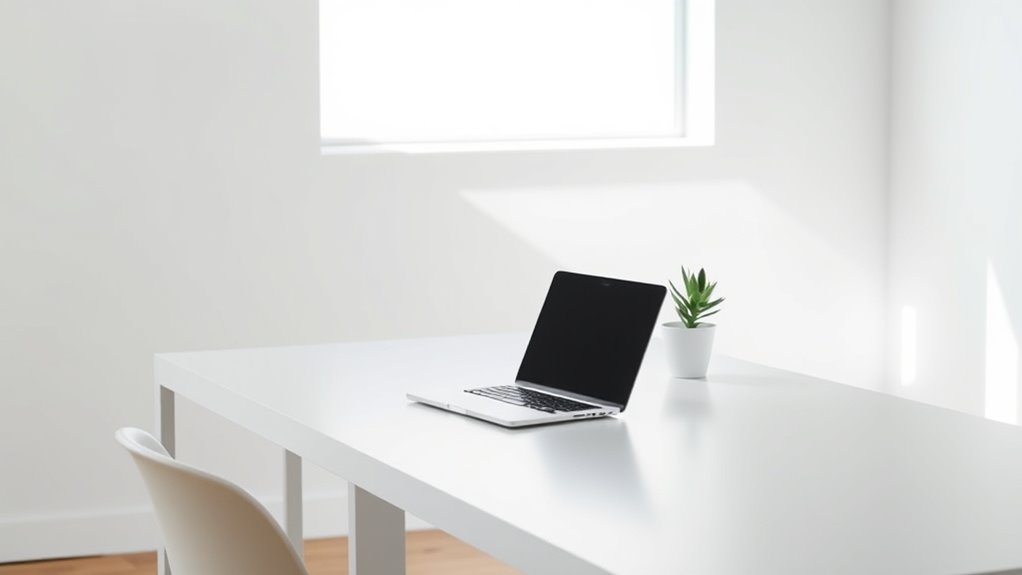

A minimalist workspace is a clean, clutter-free environment designed with purpose, using simple furniture, neutral colors, and essential tools to boost focus. High performers love it because it reduces distractions, improves mental clarity, and promotes calmness, helping them stay productive and creative. By simplifying your surroundings, you create an atmosphere that supports your best work. Keep exploring to discover more ways this environment can transform your productivity and well-being.
Key Takeaways
- A minimalist workspace features a clutter-free environment with essential, purposeful items to enhance focus and productivity.
- It emphasizes visual harmony, calming colors, and simple design to reduce distractions and promote mental clarity.
- High performers prefer minimalist workspaces because they boost concentration, foster creativity, and lower stress levels.
- These spaces incorporate ergonomic furniture, natural elements, and organized setups to support comfort and efficiency.
- Minimalist workspaces align with future trends like biophilic design and smart technology, enhancing overall well-being and performance.

Logitech G413 SE Full-Size Mechanical Gaming Keyboard - Backlit Keyboard with Tactile Mechanical Switches, Anti-Ghosting, Compatible with Windows, macOS - Black Aluminum
Take your gaming skills to the next level: The Logitech G413 SE is a full-size keyboard with gaming-first...
As an affiliate, we earn on qualifying purchases.
Defining the Core Principles of Minimalism in Workspaces
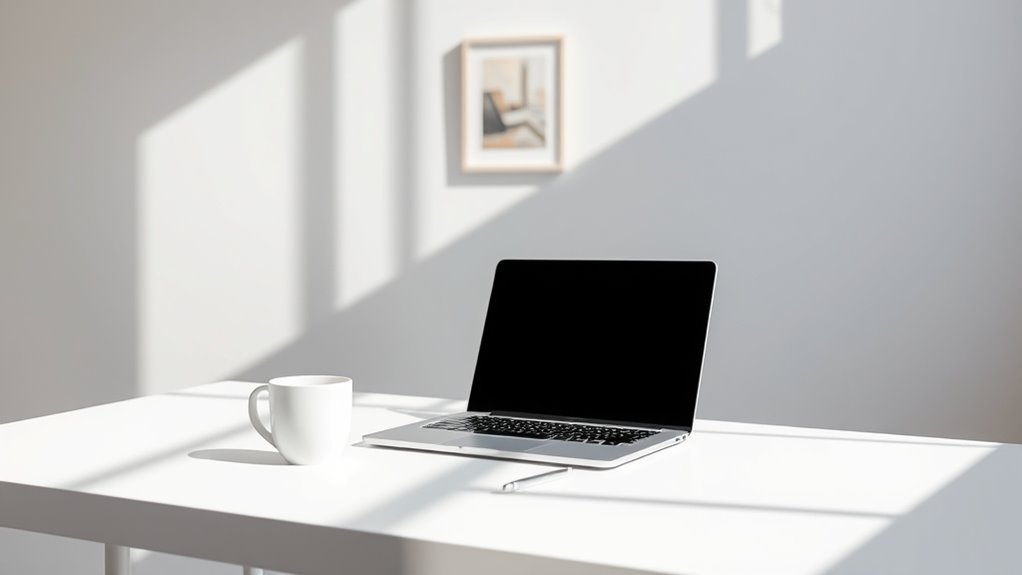
Minimalism in workspaces centers on simplifying your environment to enhance focus and productivity. The core principles emphasize creating visual balance, where every element is intentionally placed to avoid clutter and chaos. This balance helps your eyes rest and keeps distractions at bay. Color psychology also plays a pivotal role; choosing neutral or calming hues can promote tranquility and mental clarity. Minimalist design avoids unnecessary decor, allowing your workspace to feel open and orderly. You want to prioritize quality over quantity, selecting only essential items that serve a purpose. By maintaining visual harmony and thoughtful color choices, you set a foundation that supports concentration, reduces stress, and encourages a disciplined, efficient work ethic. These principles are the backbone of a truly minimalist workspace. Incorporating vegetable juices into your routine can also boost mental clarity and overall well-being, supporting the focus needed for high performance. Additionally, understanding legal processes related to various life events can help you stay organized and prepared for unexpected changes, especially when managing complex situations like divorce proceedings or other legal matters. Recognizing the importance of vacuum quality can further contribute to a clean and healthy environment, which aligns with the minimalist ethos of reducing unnecessary clutter and toxins. Engaging with emerging AI ethicist jobs can also inspire you to integrate ethical considerations into your work environment, fostering a responsible and balanced approach to technology use.

Logitech Z207 2.0 Stereo Computer Speakers with Bluetooth
Versatile setup with speakers that connect easily to computers and other devices via Bluetooth wireless or 3.5mm cable
As an affiliate, we earn on qualifying purchases.
The Psychological Benefits of a Clutter-Free Environment
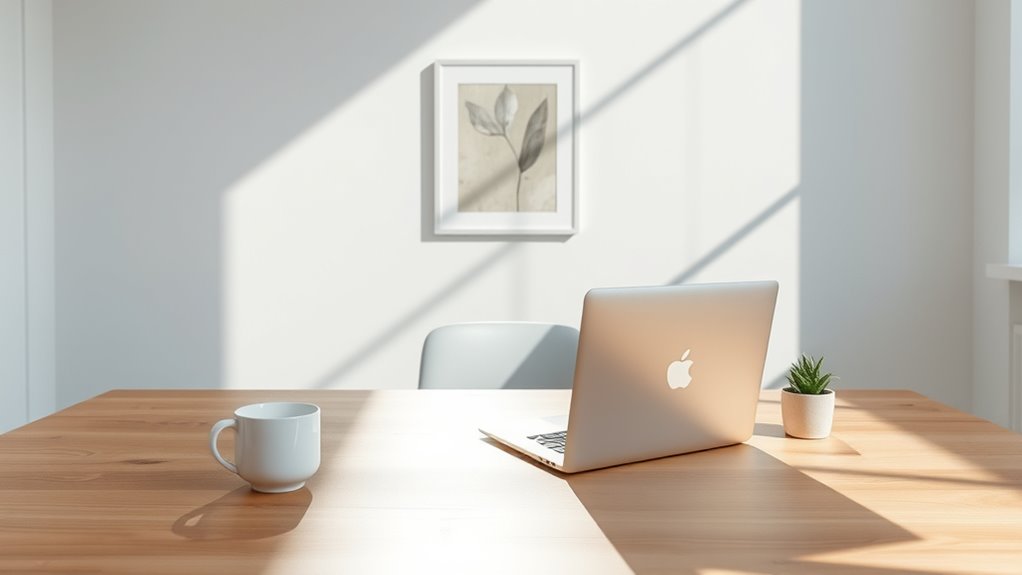
A clutter-free workspace does more than just look tidy; it markedly impacts your mental well-being. When you create a mindful workspace focused on aesthetic simplicity, you reduce visual noise and mental clutter. This clarity fosters a sense of calm, allowing you to focus on what truly matters. A clean environment can lift your mood, boost confidence, and decrease stress levels. By maintaining a minimalist setup, you free your mind from distractions, enabling better decision-making and emotional resilience. The psychological benefits include feeling more in control, experiencing less anxiety, and cultivating a positive mindset. Embracing aesthetic simplicity ultimately helps you stay centered, energized, and ready to tackle challenges with a clear head. Your workspace becomes a sanctuary for mental clarity and emotional stability. Incorporating minimalist design principles can further enhance these benefits by promoting intentionality and reducing unnecessary clutter, which aligns with the importance of vetted organizational strategies for mental health. Additionally, selecting appropriate storage solutions can help maintain this clean environment over time, ensuring sustained focus and well-being.
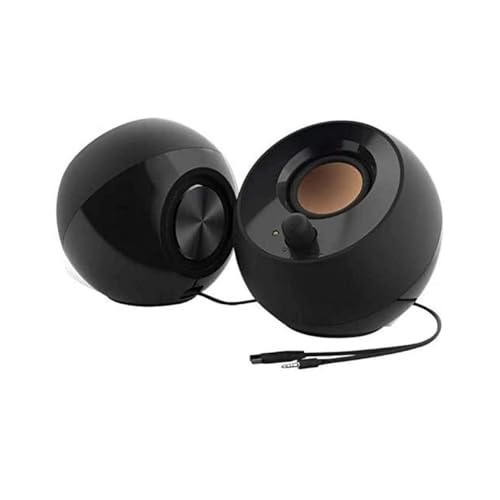
Creative Pebble 2.0 USB-Powered Desktop Speakers with Far-Field Drivers and Passive Radiators for Pcs and Laptops (Black)
Single USB cable for computers and laptops | enjoy a hassle-free Audio experience with a single USB cable...
As an affiliate, we earn on qualifying purchases.
How Minimalist Design Enhances Focus and Creativity

When your workspace embraces minimalist design, it naturally sharpens your focus and sparks creativity. By reducing clutter, you eliminate distractions that drain your mental energy. Color psychology plays a key role—soothing, neutral hues promote calmness, while strategic pops of color can boost motivation. Ergonomic design ensures comfort, helping you stay engaged without physical strain. A clean, streamlined environment minimizes cognitive overload, making it easier to concentrate on tasks. With fewer visual stimuli, your mind can better process ideas and generate innovative solutions. Incorporating natural materials into your workspace can further enhance a sense of tranquility and authenticity, fostering a peaceful environment conducive to productivity. Additionally, adopting remote hackathons principles such as digital collaboration tools can inspire innovative approaches to organizing your space effectively. Creating a productive environment that aligns with minimalist principles can significantly improve your workflow. Minimalist spaces create a sense of order that fosters mental clarity, allowing your creativity to flourish. When your environment is simplified, you’re more likely to stay engaged, inspired, and productive throughout your workday. Incorporating organizational strategies can also help maintain the minimalist aesthetic and keep your workspace clutter-free.

Computer Speakers for Desktop PC Monitor, USB Plug-in, Wired, Computer Soundbar for PC, Laptop Speakers with Adaptive-Channel-Switching, Loud Sound, Deep Bass, USB C Adapter, Easy to Clip on Monitor
[COMPATIBLE WITH USB DEVICES] - Our USB Speakers are compatible with Windows, macOS, ChromeOS, and Linux, making them...
As an affiliate, we earn on qualifying purchases.
Essential Elements for Creating a Minimalist Desk Setup
Creating a clutter-free desk setup starts with selecting the right elements that promote simplicity and efficiency. Focus on items that prioritize ergonomic comfort and aesthetic simplicity, reducing distractions and physical strain. Your workspace should include a high-quality ergonomic chair and a desk that supports good posture, making long hours comfortable. Keep surfaces clear of unnecessary objects to maintain a clean look that encourages focus. Use a minimal number of essential tools that serve your daily tasks without cluttering your space. Incorporating subtle decorative elements inspired by Steampunk and Victoriana designs can add personality without overwhelming the clean aesthetic. Additionally, choosing vetted and reliable accessories ensures your workspace remains functional and free from unnecessary disruptions. Embracing biophilic design principles, such as adding small plants or natural textures, can further enhance your environment and boost your productivity. Furthermore, selecting ergonomic accessories tailored to your specific needs can help prevent discomfort and sustain high performance throughout your workday. To optimize your workspace further, consider integrating process-oriented organization methods that promote space maximization and organization, ensuring your environment remains tidy and efficient.
The Impact of Minimalism on Stress Reduction and Mental Clarity
A clutter-free workspace can markedly reduce your stress levels and create a sense of calm. When your environment is organized, it’s easier to focus and think clearly without distractions. Embracing minimalism helps you feel more relaxed and centered throughout your day.
Clutter-Free Environment Benefits
A clutter-free workspace can considerably reduce your stress levels and boost mental clarity. When your environment is organized and simple, you can focus better and feel more in control. By minimizing decorative accessories, you avoid visual chaos that distracts your mind. Thoughtful color schemes, like calming neutrals or soft hues, create a peaceful atmosphere that promotes relaxation. Removing clutter allows your brain to process information more efficiently and prevents overwhelm. Incorporating efficient tools and equipment into your workspace further enhances productivity by streamlining your tasks and reducing unnecessary movements. Additionally, a well-structured environment can improve your visual clarity, making it easier to stay attentive and avoid distractions. Using organization techniques can help maintain this sense of order and ensure your workspace remains clutter-free over time. To sustain this environment, adopting clutter management practices is essential for long-term effectiveness. Furthermore, implementing water-related wellness practices, such as small fountains or aquariums, can promote a calming ambiance that supports mental well-being. You’ll experience a sense of calm that encourages productivity and creativity. Clear surfaces and streamlined setups make it easier to find what you need quickly. A tidy workspace also signals that you value your mental well-being, empowering you to perform at your best.
Enhanced Focus and Calm
When your workspace is streamlined and free of unnecessary clutter, it naturally fosters enhanced focus and a sense of calm. Ergonomic furniture supports your body, reducing physical stress and allowing you to concentrate longer without discomfort. Ambient lighting creates a soothing environment, minimizing eye strain and promoting mental clarity. A minimalist setup minimizes distractions, helping you stay engaged with your tasks and avoid mental fatigue. The clean, organized space encourages a calm mindset, making it easier to think clearly and prioritize effectively. Incorporating proper organization techniques can further optimize your workspace for efficiency and peace of mind. Additionally, using the right accessories can enhance both comfort and functionality in your minimalist environment. Overall, a minimalist workspace cultivates an atmosphere of tranquility that supports both mental and physical well-being, empowering you to perform at your best.
Practical Tips for Transitioning to a Minimalist Workspace
To shift smoothly to a minimalist workspace, start by decluttering your desk and removing anything that isn’t essential. Focus on keeping only the tools and supplies you regularly use to stay organized and efficient. Finally, set up a routine to maintain this simplicity, so your workspace stays clean and clutter-free over time.
Declutter Your Desk Space
Clearing your desk starts with sorting through everything on it. Remove clutter to create space for what truly matters, and consider how your environment influences your mood. Use color psychology to choose calming hues that promote focus and reduce stress. Opt for ergonomic seating that supports good posture, so you can work comfortably longer. Keep only essential tools within reach, such as a notebook, pen, and computer. A tidy desk minimizes distractions and boosts productivity. Remember, a minimalist workspace isn’t just about aesthetics; it’s about creating an environment that energizes your mind. When your desk is free of unnecessary items, you’ll feel more in control and ready to tackle your tasks with clarity. Simplify, organize, and enjoy the peace of a decluttered space.
Choose Essential Tools Only
Moving to a minimalist workspace means carefully selecting only the tools that you truly need for your daily tasks. Focus on essential items that boost productivity, like a good notebook, reliable computer, and necessary stationery. Avoid clutter by resisting the urge to include unnecessary gadgets. To personalize your space, choose simple decorative elements that reflect your style without overwhelming. You can add subtle touches such as a small plant or a favorite photo. Consider the following:
| Essential Tools | Personalization Options |
|---|---|
| Laptop | Minimalist artwork |
| Notepad | Personal mementos |
| Stationery | Decorative elements like a plant or desk lamp |
Streamlining your tools helps maintain focus and creates a calming environment.
Establish a Maintenance Routine
Ever wonder how to keep your minimalist workspace orderly and clutter-free over time? Establishing a maintenance routine helps you stay on track effortlessly. Dedicate a few minutes daily to tidy your space, ensuring everything remains purposeful and organized. Regularly assess your ergonomic setup to prevent discomfort and boost productivity. Allocate time weekly to declutter and remove unnecessary items, reinforcing your intentional workspace. This consistency enhances your time management skills by minimizing distractions. By maintaining a clean, ergonomic environment, you foster focus and high performance.
- Set a daily 5-minute tidy-up ritual to prevent buildup
- Schedule weekly decluttering sessions to eliminate distractions
- Reassess your ergonomic setup periodically for comfort and efficiency
Success Stories: High Performers Who Swear by Minimalist Workspaces
Many high performers credit their minimalist workspaces for boosting focus and productivity. They find that a clutter-free environment minimizes distractions, allowing for better creative collaboration and sharper thinking. These individuals prioritize ergonomic ergonomics, ensuring their workspace supports comfort during long hours, which reduces fatigue and enhances concentration. By stripping away unnecessary items, they create a clean, organized area that fosters mental clarity. Minimalist workspaces also encourage intentionality, helping them stay aligned with goals and priorities. Success stories from entrepreneurs, writers, and executives reveal that adopting minimalist principles has transformed their work routines. They experience increased efficiency, reduced stress, and a more inspiring environment. Ultimately, these high performers swear by simplicity, proving that a minimalist workspace can be a powerful tool for achievement.
Common Mistakes to Avoid When Designing a Minimalist Office
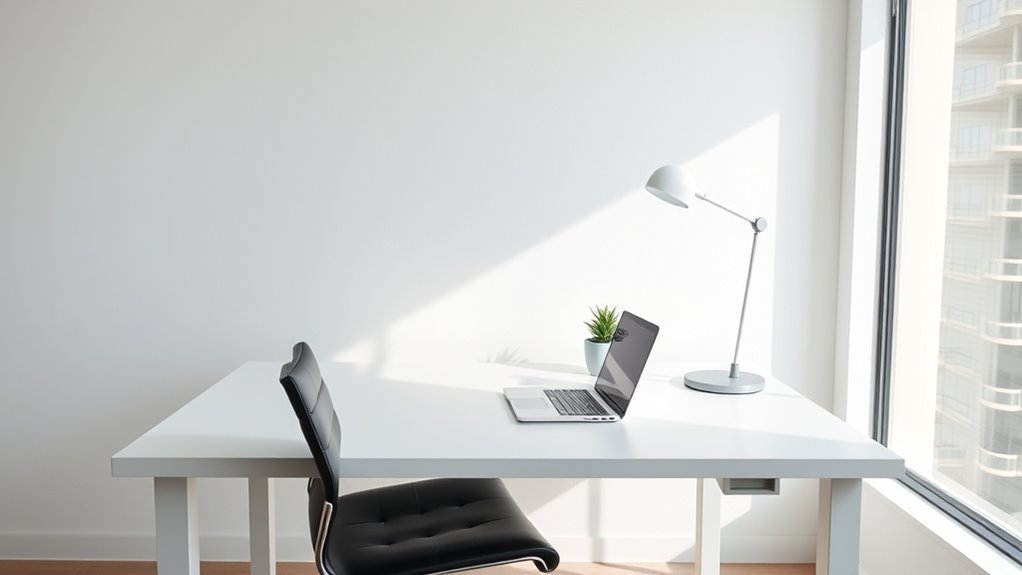
Designing a minimalist office often seems straightforward, but it’s easy to make mistakes that undermine its effectiveness. One common error is overloading the space with decorative accessories, which can create clutter and distract from focus. Another pitfall is ignoring color psychology, leading to a workspace that feels unstimulating or stressful. Additionally, choosing too many contrasting or bright colors can disrupt the calming vibe essential to minimalism. To avoid these mistakes, keep accessories simple and meaningful, stick to a cohesive color palette, and prioritize functionality over decoration. Remember, minimalism isn’t about emptiness—it’s about intentional design. When you strike the right balance, your workspace becomes an inspiring environment that fosters productivity and clarity.
Future Trends in Minimalist Work Environment Design
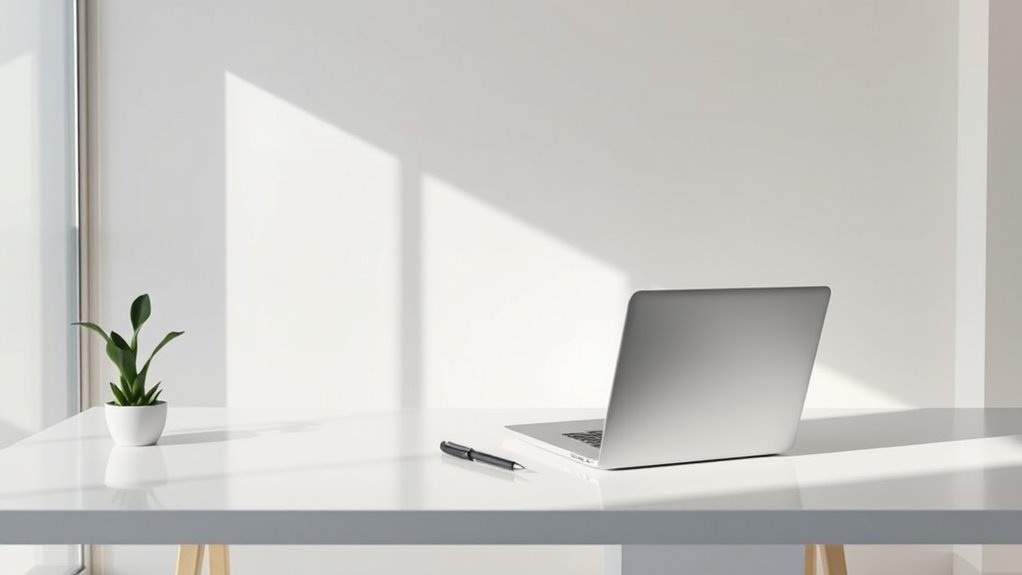
As remote work and technological advancements continue to shape the modern office, future trends in minimalist work environment design focus on seamlessly integrating smart features and sustainable materials. You’ll see more biophilic elements like natural light, greenery, and organic textures, creating calming, health-promoting spaces. Ergonomic furniture will also evolve, prioritizing comfort without clutter, supporting long work sessions. Smart solutions such as automated lighting and climate control enhance efficiency while maintaining simplicity. Sustainability remains key, with eco-friendly materials reducing environmental impact. Below is a visual overview:
| Trend | Description | Benefits |
|---|---|---|
| Biophilic Elements | Natural integration in decor | Improves mood and focus |
| Ergonomic Furniture | Adjustable, space-saving designs | Reduces physical strain |
| Smart Technology | Automated environmental controls | Enhances productivity |
| Sustainable Materials | Recycled and eco-friendly options | Low environmental footprint |
| Minimal Clutter | Streamlined, multifunctional items | Boosts mental clarity |
Frequently Asked Questions
How Does Minimalism Influence Long-Term Productivity?
Minimalism boosts your long-term productivity by enhancing mental clarity and supporting sustained focus. When clutter is minimized, you spend less time searching for items or getting distracted, allowing you to stay on task longer. A clean, simple workspace reduces stress and mental fatigue, helping you maintain consistent performance over time. By creating an environment that promotes clear thinking, minimalism guarantees you stay productive and efficient in the long run.
Can Minimalism Suit All Types of Work Environments?
Minimalism can suit many work environments by emphasizing clean decor style and ergonomic design, creating a calm, focused atmosphere. You’ll find that simple, clutter-free spaces boost productivity and reduce stress, regardless of your industry. Whether you’re in a creative studio or corporate office, adopting minimalist principles helps you stay organized and comfortable, making your environment adaptable to various work needs while promoting efficiency and well-being.
What Are Common Challenges When Adopting Minimalism at Work?
Like steering a tightrope, adopting minimalism at work challenges you to balance clutter reduction with aesthetic simplicity. You may struggle with letting go of personal items or maintaining discipline when distractions arise. It’s tough to resist the allure of unnecessary gadgets or decorations. Staying committed requires focus; otherwise, your workspace could revert to chaos. Embracing this challenge helps you create a clear, efficient environment that boosts productivity and mental clarity.
How Does Minimalism Impact Team Collaboration and Communication?
Minimalism boosts team collaboration and communication by reducing visual clutter, making shared spaces feel more organized and inviting. When your workspace is clean and streamlined, it fosters mental clarity, helping everyone focus on tasks and ideas without distractions. This clarity encourages open dialogue and efficient teamwork, as members can easily access what they need and feel motivated to contribute. Ultimately, minimalism creates an environment where collaboration flows seamlessly.
Are There Specific Industries That Benefit Most From Minimalist Workspaces?
Ever wondered which industries thrive with minimalist workspaces? You’ll find creative fields like design, advertising, and tech benefit most, as they often battle creative clutter. Aesthetic simplicity helps boost focus and sparks innovation. Don’t these environments foster clarity, making it easier to generate ideas and collaborate? By reducing distractions, these industries maximize productivity and creativity, proving that less truly is more for high-performing teams.
Conclusion
Imagine stepping into a workspace where every surface invites clarity, where your mind can breathe freely amidst sleek, simple lines. By embracing minimalism, you create a sanctuary that sharpens focus, sparks creativity, and eases stress. When clutter falls away, your energy flows unencumbered, transforming your workday into a calm, purposeful journey. This isn’t just about design—it’s about crafting a space that empowers you to perform at your very best.