Choosing between an ultrawide monitor and dual monitors depends on your workflow needs. Ultrawides offer seamless, expansive views perfect for multitasking and creative projects, reducing the clutter of multiple cables. Dual monitors provide flexible space management and easier upgrades, ideal for varied tasks. Consider your budget, desk space, and hardware compatibility. To discover which setup boosts your creativity and productivity the most, explore more about their detailed benefits and drawbacks ahead.

Get your wardrobe favorites delivered free — and shop member deals
- Fast, free delivery on millions of items
- Access to Prime Big Deal Days deals on October 6–7
- Prime Video, Amazon Music and more included
Key Takeaways
- Ultrawide monitors offer seamless, continuous workspace ideal for creative tasks, while dual monitors provide flexible, independent screens for multitasking.
- Ultrawides reduce bezel distractions and clutter, enhancing visual flow; dual monitors allow customized arrangement and expansion.
- Hardware requirements for ultrawides are higher, but they simplify setup; dual monitors may need more configuration and compatibility checks.
- Ultrawide screens support better ergonomics and viewing comfort, benefiting long creative sessions; dual monitors require proper positioning for health.
- Future upgrades are easier with dual monitors due to their independent components; ultrawides often have fewer ports and limited upgrade options.
ultrawide monitor for creative work
As an affiliate, we earn on qualifying purchases.
As an affiliate, we earn on qualifying purchases.
Visual Workspace and Field of View
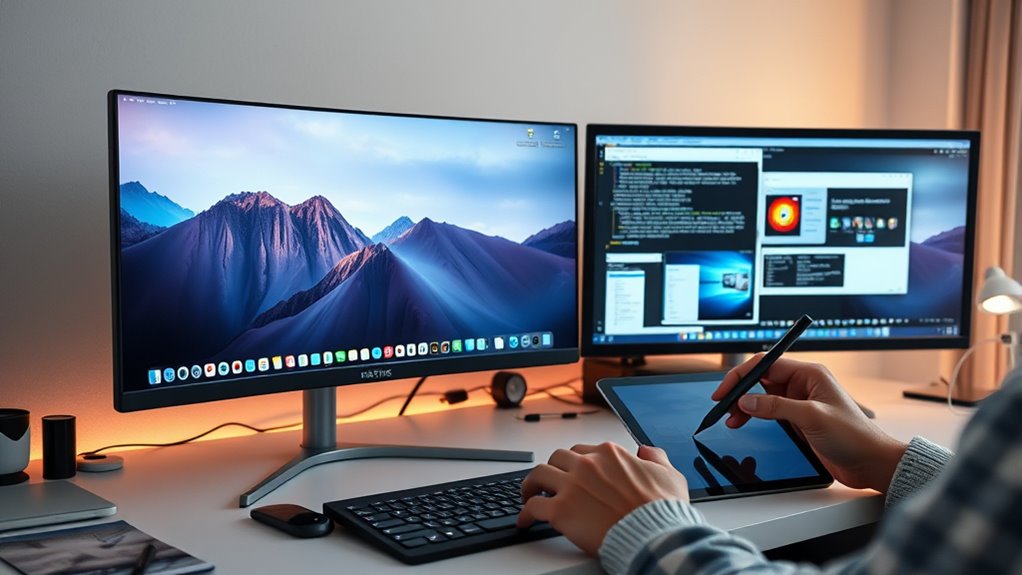
An ultrawide monitor provides a seamless, expansive view that often surpasses the combined width of dual monitors, creating a more immersive workspace. With a wider field of view, you can comfortably see more content at once without needing to turn your head or adjust your position. This enhances your visual workspace, making it feel more integrated and natural. You won’t experience the split or bezel distractions common with dual screens, which can break your focus. An ultrawide allows you to expand your workspace horizontally, giving you a panoramic view that’s ideal for creative tasks like editing, design, and coding. This larger visual scope helps you stay organized, minimizes window switching, and keeps everything within your peripheral vision, boosting overall productivity and workflow. Additionally, the design elements of an ultrawide monitor contribute to a cleaner, more cohesive setup that can complement various workspace aesthetics. The field of view offered by an ultrawide can also reduce eye strain by minimizing the need for frequent refocusing or head movement during long work sessions. Incorporating features like curved screens can further enhance comfort and immersion during extended use. Moreover, understanding the importance of visual ergonomics can help you optimize your setup for long-term comfort and efficiency. Exploring display technology options can further improve your visual experience and reduce fatigue during prolonged use.
dual monitor setup for designers
As an affiliate, we earn on qualifying purchases.
As an affiliate, we earn on qualifying purchases.
Multitasking and Screen Management

With an ultrawide monitor’s expansive screen real estate, managing multiple tasks becomes more straightforward. You can easily organize software windows side by side, enhancing workflow and reducing the need to switch between applications. This seamless integration boosts productivity, especially when working with complex design or editing tools that benefit from consistent color accuracy across the entire display. The large, continuous screen minimizes distractions caused by bezels or gaps, allowing you to focus on your creative projects. Dual monitors can also support multitasking, but they often require manual arrangement and adjustments. An ultrawide monitor simplifies screen management by providing a unified workspace, making it easier to monitor multiple processes simultaneously and maintain ideal software integration without sacrificing color precision.
curved ultrawide monitor 34 inch
As an affiliate, we earn on qualifying purchases.
As an affiliate, we earn on qualifying purchases.
Cost and Budget Considerations
Choosing between an ultrawide monitor and dual monitors often hinges on your budget, as costs can vary considerably. A thorough price comparison helps you determine which setup fits your financial plan. Ultrawide monitors tend to have a higher initial cost, but they eliminate the need for multiple units, potentially saving money. Conversely, dual monitors might be more affordable upfront, especially if you already own one or more displays. When budget planning, consider not only the purchase price but also additional costs like mounts, cables, and future upgrades. Keep in mind that quality and features impact price—more advanced models may cost more but offer better performance. Balancing your needs with your budget ensures you make a practical choice that supports your creative work without overspending. Additionally, cost-effective options such as refurbished or budget-friendly models can provide quality performance without exceeding your budget constraints. Considering upgrade potential can also influence your decision, as some setups allow easier future enhancements, and understanding the cost and budget considerations helps you make an informed choice that aligns with your financial situation. Furthermore, evaluating long-term value can help determine which setup offers better durability and adaptability over time, especially when factoring in investment in quality to ensure longevity.
As an affiliate, we earn on qualifying purchases.
Desk Space and Ergonomics
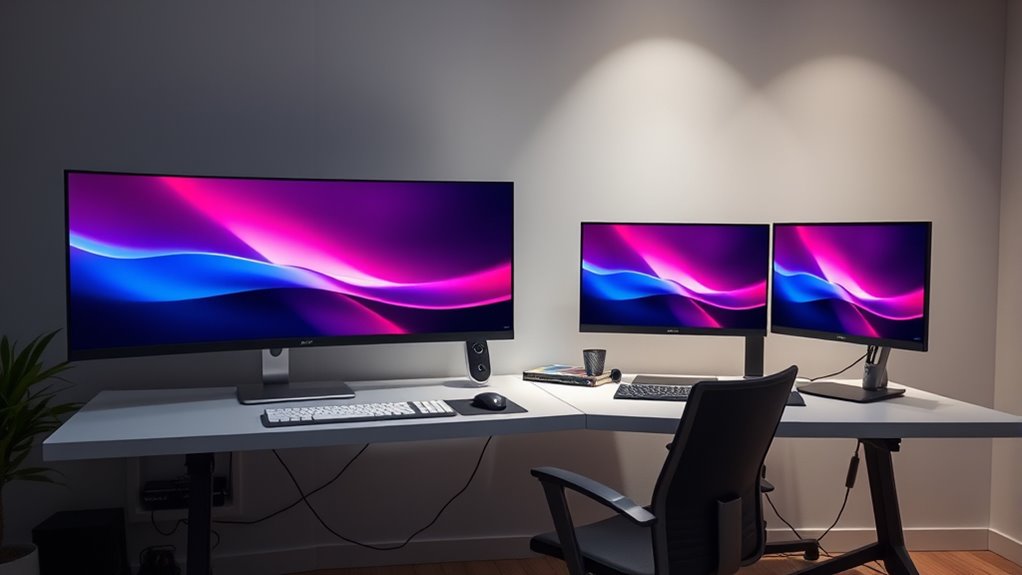
Your workspace’s layout considerably impacts your comfort and efficiency. An ultrawide monitor can save space and create a cleaner look, while dual monitors might require more room but offer flexible positioning. Considering ergonomic setup and clutter reduction helps you choose the best option for a tidy, comfortable desk. Additionally, understanding pop culture trends can inspire a more engaging and personalized workspace environment. Incorporating office plants can also improve air quality and add a touch of nature, enhancing overall workspace comfort. Moreover, selecting equipment with energy efficiency features can contribute to a more sustainable workspace environment. Being aware of ergonomic principles can further optimize your desk setup for long-term health benefits. Recognizing angel number soulmate signs can also motivate you to create a nurturing and positive workspace that reflects your personal growth.
Space Efficiency
An ultrawide monitor can considerably save desk space by combining what would typically require two separate screens into a single, streamlined display. This reduces clutter and helps you maintain better desk organization. Plus, with fewer cables running across your workspace, cable management becomes simpler—less tangling and fewer distractions. You’ll have more room for other essentials and a cleaner look overall. Additionally, choosing an ultrawide monitor can improve your visual workspace, providing a seamless, expansive view that enhances productivity and immersion.
Ergonomic Setup
An ultrawide monitor often provides a more ergonomic setup by allowing you to position it at a comfortable eye level and reducing the need for multiple monitor adjustments. Its large, single screen minimizes neck and eye strain by eliminating gaps between displays. Many ultrawides come with adjustable height features, so you can fine-tune your setup for perfect comfort. This flexibility helps maintain proper posture during extended work sessions. Additionally, with integrated color calibration options, you can guarantee consistent color accuracy across the entire display, reducing eye fatigue caused by mismatched hues. Overall, an ultrawide promotes better ergonomics by streamlining your workspace and enabling precise adjustments, making it ideal for creatives who spend hours in front of the screen. Incorporating home office ergonomics principles can further enhance your comfort and productivity.
Clutter Reduction
Since space is often limited on desks, an ultrawide monitor helps reduce clutter by consolidating what would be multiple screens into a single, streamlined display. This promotes a minimalist setup, freeing up valuable desk space and making your workspace look cleaner. With fewer cables and stands, you can enjoy improved visual clarity without the distraction of multiple monitors. An ultrawide also minimizes the need for extra peripherals, further decluttering your area. Plus, it encourages better ergonomics by reducing the amount of movement between screens. Many ultrawides are designed with clutter reduction in mind, making them an ideal choice for creating a sleek and organized workspace. Additionally, the monitor size can influence how efficiently you can manage multiple tasks at once, streamlining your workflow and reducing visual fatigue. Incorporating advanced display technology can further enhance comfort and productivity during long work sessions. Furthermore, the integration of ergonomic design features can provide better support, reducing strain during extended use. The visual quality of ultrawide monitors often includes high refresh rates and low latency, which can be beneficial for creative professionals requiring precise visuals.
Compatibility and Setup Complexity

Setting up an ultrawide monitor or dual screens depends on your device compatibility and personal setup skills. Ultrawide monitors usually connect easily with fewer cables, while dual monitors may require more configuration. Consider how simple or complex the process will be based on your hardware and connections. Additionally, mindful setup can help reduce frustration and ensure a smoother experience. Being aware of your system requirements can further simplify the installation process and improve overall performance. Proper monitor calibration can also enhance visual quality and reduce eye strain during extended use.
Compatibility With Devices
Choosing between an ultrawide monitor and dual monitors largely depends on how easily they integrate with your existing devices. Your device connectivity options and software compatibility are key factors. An ultrawide monitor typically connects through a single cable, simplifying setup, but verify your graphics card supports the resolution. Dual monitors may require multiple video outputs and adapters, which can complicate setup.
- Check if your device has enough ports for multiple displays
- Confirm compatibility with your operating system and graphics card
- Be aware of potential driver updates needed for smooth operation
- Consider whether your software supports multi-display configurations effectively
Matching your devices’ capabilities with your monitor choice ensures a seamless experience without unexpected compatibility issues.
Setup Ease and Challenges
When it comes to setup, ultrawide monitors usually offer a straightforward experience with a single cable connection, making them quick to install and configure. They often require less effort to guarantee good color accuracy, as you only need to calibrate one display instead of multiple. This simplicity enhances portability, allowing you to move or reposition the monitor easily without juggling multiple cables or adapters. In contrast, dual monitors can be more complex, with additional cables, adapters, and adjustments needed for seamless alignment. Setting up two screens might involve more troubleshooting to achieve consistent color accuracy across displays. Overall, ultrawides provide a hassle-free, cohesive setup process, especially beneficial if you prioritize ease of installation and maintaining portability.
Performance and Hardware Requirements

To achieve smooth performance with an ultrawide monitor or dual monitors, your hardware needs to be capable of handling the increased graphical demands. This means ensuring your graphics performance is up to the task, especially for resource-intensive creative work. Compatibility issues can also arise if your hardware isn’t designed to support such setups.
Consider these key points:
- A powerful graphics card with sufficient VRAM improves graphics performance.
- Your CPU should handle multiple displays without bottlenecks.
- Check if your motherboard and ports support the monitor’s resolution and connections.
- Adequate RAM is essential for multitasking and rendering tasks.
Ensuring hardware compatibility and performance will help you get the most out of your ultrawide or dual monitor setup without lag or crashes.
Impact on Workflow and Creativity
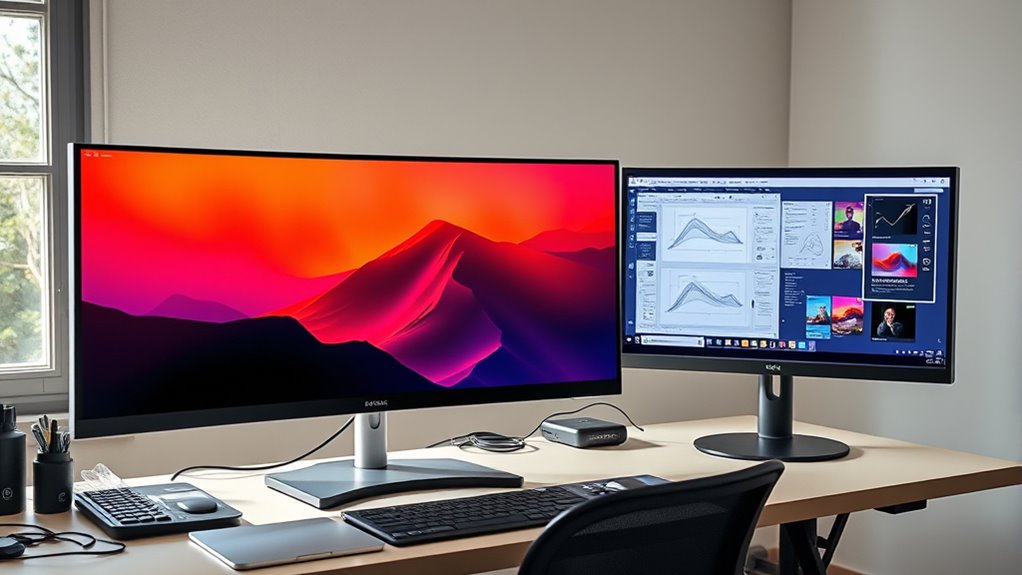
An ultrawide monitor or dual monitors can considerably enhance your workflow by giving you more screen real estate to organize and access multiple applications simultaneously. This setup allows you to seamlessly move between tasks, boosting efficiency and reducing switching time. For creatives, maintaining color accuracy is vital, so consider monitors with good color calibration options to ensure your work looks consistent across screens. An ultrawide monitor offers a continuous workspace, which can improve visual flow and inspire creativity, especially when working on large projects. Dual monitors, on the other hand, provide flexibility in managing different tools or reference materials side by side. Both setups can stimulate creativity by making it easier to experiment and edit without constant window switching. Your choice depends on your workflow needs and how significant color fidelity is to your projects.
Flexibility and Future-Proofing
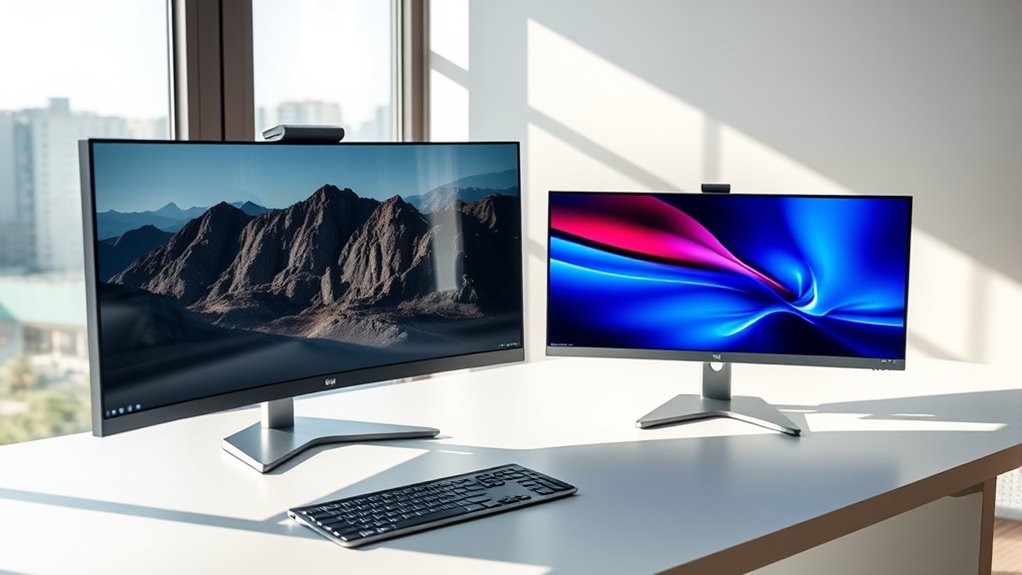
Flexibility and future-proofing are key considerations when choosing between an ultrawide monitor and dual monitors. Your decision impacts how easily you can adapt to evolving software compatibility and future upgrades. Ultrawides often offer seamless integration for current applications but may face limitations with specialized software. Dual monitors provide more versatility, allowing you to upgrade or replace screens independently. Consider how each setup supports your workflow long-term.
- Ultrawide monitors tend to have fewer connection ports, which can limit future upgrade options.
- Dual monitors offer greater flexibility for adding or removing screens as your needs change.
- Software compatibility varies; some programs handle ultrawide aspect ratios better than others.
- Future upgrades may require different hardware considerations depending on your choice.
Overall User Experience and Preferences
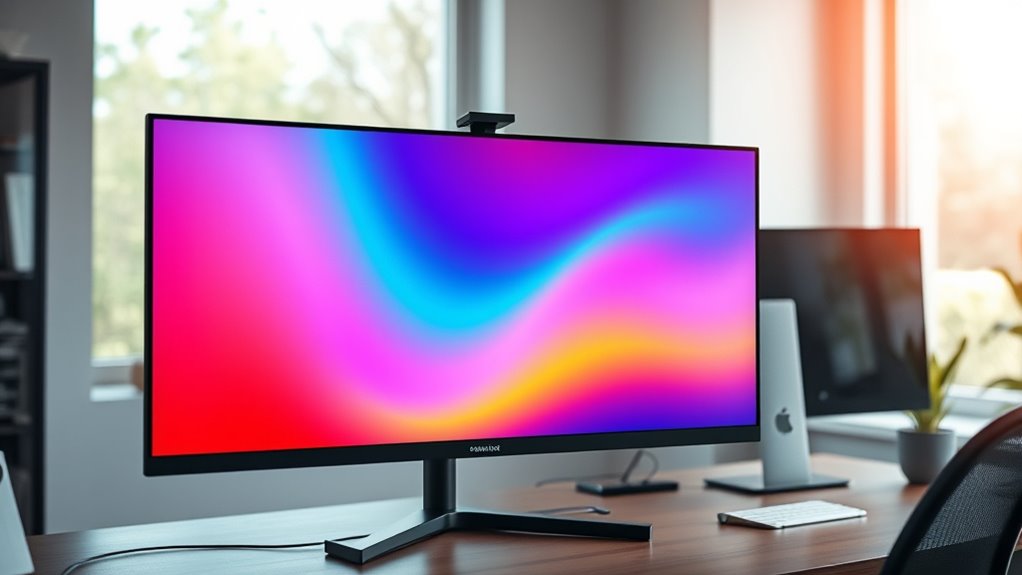
Choosing between an ultrawide monitor and dual monitors ultimately comes down to how each setup feels in everyday use. You might prefer the seamless experience of an ultrawide, especially for tasks that benefit from wide, continuous screen space, but resolution differences can impact clarity and detail, affecting tasks like color grading or detailed design work. Color accuracy is also essential; some ultrawides offer better calibration options, giving you more consistent colors across the entire display. Dual monitors can provide more flexibility and customization, but managing multiple screens may feel disjointed or distracting. Ultimately, your personal preference depends on how you prioritize immersion, ease of multitasking, and visual fidelity, all of which influence your overall user experience.
Frequently Asked Questions
Which Setup Offers Better Color Accuracy for Creative Work?
A dual monitor setup generally offers better color accuracy for creative work because you can calibrate each monitor individually, ensuring consistent color reproduction. Ultrawide monitors may face calibration challenges and could have slight color inconsistencies across the screen. If color precision is your priority, opt for dual monitors with professional calibration tools, as they provide better color consistency and allow you to fine-tune each display for accurate, reliable results.
How Do Ultrawide Monitors Affect Color Calibration Compared to Dual Monitors?
Ultrawide monitors can make color calibration more challenging because they often have uniform panels that may vary in color consistency across the screen. This means you might face calibration challenges to achieve accurate color representation throughout the entire display. With dual monitors, you can calibrate each screen individually, resulting in better overall color accuracy and consistency, which is essential for detailed creative work.
Are There Specific Software Tools Optimized for Ultrawide or Dual Monitor Setups?
You’ll love how specialized software tools like DisplayCAL and SpyderX optimize both ultrawide and dual monitor setups, supercharging your workflow efficiency. These tools guarantee perfect color calibration and seamless display management, making your creative process smoother and more precise. While some software may favor one setup over the other, most modern applications are highly compatible, giving you the flexibility to choose your ideal workspace without sacrificing quality or productivity.
What Are the Long-Term Maintenance Considerations for Each Configuration?
For long-term maintenance, you should focus on cable management to prevent clutter and hardware upgrades to keep your setup current. Ultrawide monitors typically require fewer cables, making management easier, but upgrading hardware like graphics cards might be necessary for peak performance. Dual monitors may need more cable organization, and replacing individual screens can be more frequent. Regularly checking connections and planning upgrades will keep your workspace efficient and reliable.
How Do These Setups Impact Collaboration With Clients or Team Members?
You might find that your setup influences collaborative dynamics and remote teamwork. An ultrawide monitor fosters seamless sharing of visuals during meetings, making collaboration smoother. Conversely, dual monitors allow you to keep communication tools open while working on projects, enhancing efficiency. Both setups can improve client presentations and teamwork, but choosing depends on how you prefer to organize your workspace to optimize interactions and streamline remote collaboration.
Conclusion
Choosing between an ultrawide monitor and dual monitors depends on your workflow and preferences. Both setups have their perks, but it’s your unique needs that matter most. Think of it as finding the perfect fit rather than trying to fit a square peg in a round hole. Whichever you pick, make sure it enhances your creativity and productivity. After all, the right workspace can turn a good day into a great one, so don’t settle for less.
Fall Picks
fall essentials
As an affiliate, we earn on qualifying purchases.