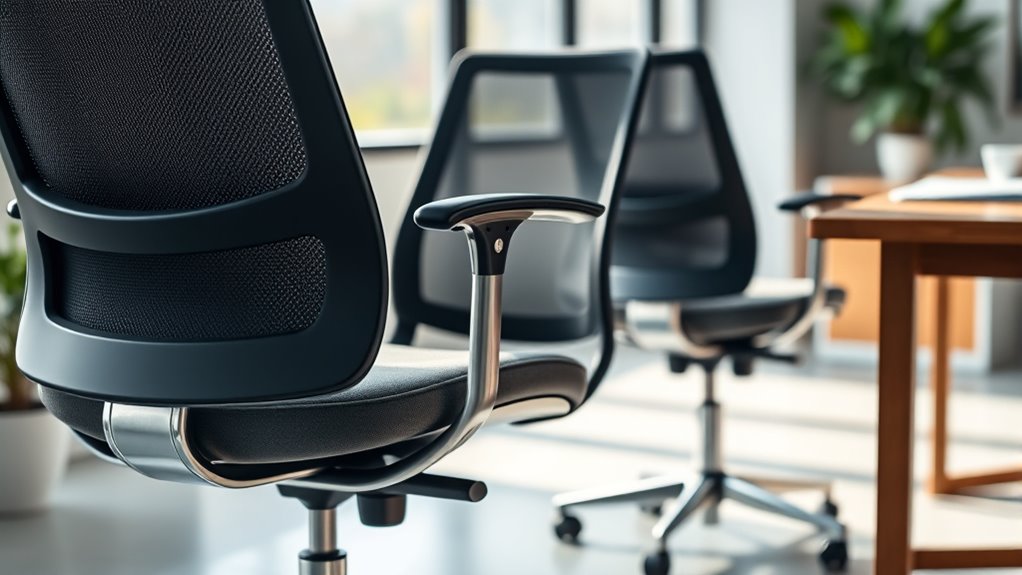

To stay focused and comfortable, choose an ergonomic chair with solid lumbar support that follows your lower back’s natural curve. Look for adjustable features like seat height, armrests, and tilt tension, so you can customize the fit for long work sessions. Proper support and flexibility help reduce back pain, improve posture, and boost productivity. Keep exploring to discover how the right ergonomic setup can transform your workspace and overall well-being.
Key Takeaways
- Proper lumbar support maintains natural spinal curves, reducing back pain and enhancing focus during extended sitting periods.
- Adjustable features like seat height and armrests allow personalized comfort, promoting better posture and concentration.
- Ergonomic designs support natural movement, minimizing fatigue and discomfort that can distract from work tasks.
- Customizable components enable users to tailor their chair to specific body needs, improving overall well-being.
- Investing in ergonomic chairs ensures long-term health benefits, boosting productivity and sustaining focus over time.

Are you tired of discomfort after long hours at your desk? If so, it’s time to contemplate how an ergonomic chair can transform your workday. The right chair isn’t just about style; it’s about supporting your body properly to keep you comfortable and focused. One of the most important features to look for is lumbar support. This support is designed to fill the natural curve of your lower back, helping you maintain proper posture and reduce strain. Without adequate lumbar support, you might find yourself slouching or experiencing back pain that distracts you from your tasks.
An ergonomic chair with lumbar support reduces back pain and improves posture for a more comfortable workday.
Adjustability is another key factor. An ergonomic chair with adjustable height allows you to set the seat at the perfect level for your desk and body. When your chair is at the right height, your feet rest flat on the floor, and your knees are bent at about a 90-degree angle. This positioning promotes better circulation and less fatigue in your legs. Additionally, adjustable height enables you to align your hips and spine correctly, preventing slouching or awkward postures that lead to discomfort over time. When your chair adapts to your body’s needs, you’ll notice an immediate difference in comfort and productivity.
Beyond height and lumbar support, look for chairs that offer customizable armrests, seat depth, and tilt tension. These features provide additional ways to tailor the chair to your specific body and work habits. For example, adjustable armrests can prevent shoulder and neck strain, especially during extended typing sessions. The ability to tilt and lock your chair also encourages movement and variation in posture, which reduces stiffness and promotes circulation.
Investing in an ergonomic chair isn’t just about comfort; it’s about safeguarding your health. Prolonged sitting in a poorly designed chair can lead to back pain, neck strain, and repetitive stress injuries. An ergonomic chair with lumbar support and adjustable height helps you maintain proper alignment, reducing these risks. It promotes a natural posture that keeps your spine supported and your muscles engaged, so you can stay focused and productive throughout the day.
Ultimately, choosing a chair with these features means you’re making an investment in your well-being. When your body feels supported, you’re less likely to experience fatigue or discomfort, which means longer periods of concentration and better work quality. Don’t underestimate the power of a well-designed ergonomic chair; it’s a simple yet essential step toward creating a healthier, more comfortable workspace.

NEO Chair Office Desk Gaming Chair Computer High Back Mesh Seat with Rolling Wheels Ergonomic Adjustable Comfy Flip-up Armrests Lumbar Support Height for Home (Black)
All-Day Ease – Breathable mesh backrest provides targeted lower back support, encouraging healthy posture and lasting comfort through…
As an affiliate, we earn on qualifying purchases.
As an affiliate, we earn on qualifying purchases.
Frequently Asked Questions
How Do I Adjust an Ergonomic Chair for Optimal Comfort?
To adjust your ergonomic chair for maximum comfort, start by setting the lumbar support to fit the natural curve of your lower back. Then, adjust the armrests so your shoulders are relaxed and elbows stay close to your sides. Make sure your feet are flat on the ground and your knees are at a 90-degree angle. Fine-tuning these features helps you maintain good posture and reduces strain during long hours.
Are Ergonomic Chairs Suitable for All Body Types?
You might think no chair can fit everyone, but ergonomic chairs are surprisingly versatile for body diversity. They’re designed with adjustable features that enhance ergonomic compatibility, accommodating various sizes and shapes. While no single chair is perfect for every individual, many models adapt well, offering comfort and support for most users. With proper adjustments, you can make an ergonomic chair work wonders for your unique body, turning discomfort into productivity.
What Materials Are Best for Long-Term Durability?
For long-term durability, you should choose chairs made from high-quality materials like steel frames and reinforced nylon or premium leather. When considering material comparison, look for options that resist wear and tear over time. Regular chair maintenance, such as cleaning and tightening screws, helps prolong its lifespan. Opt for sturdy, well-constructed materials, and you’ll enjoy a durable chair that maintains comfort and support through years of use.
Can Ergonomic Chairs Improve Posture Over Time?
Think of your posture as a garden that needs nurturing. Ergonomic chairs can be your best tools for posture correction over time, gently guiding your body into healthier positions. With consistent use, you’ll notice long-term benefits like reduced pain and improved alignment. By supporting proper ergonomics, these chairs help you develop better habits, ensuring your posture stays strong and resilient, even when you’re off the chair.
How Often Should I Replace My Ergonomic Chair?
You should replace your ergonomic chair every 7 to 10 years, depending on its chair maintenance and overall ergonomic chair lifespan. Regularly check for worn-out cushions, loose parts, or decreased support, and address issues promptly. If your chair shows significant signs of wear or no longer provides proper support despite maintenance, it’s time to invest in a new one to guarantee continued comfort and proper posture.

TRALT Office Chair – Ergonomic Desk Chair with Adjustable Lumbar Support, Mesh Computer Chair, Executive Chairs for Home Office Comfortable Lumbar Support (Black)
Ergonomic Office Chair: Experience unparalleled support with our ergonomic office chair, designed to provide comprehensive assistance for your…
As an affiliate, we earn on qualifying purchases.
As an affiliate, we earn on qualifying purchases.
Conclusion
Choosing an ergonomic chair is like planting a sturdy tree in your workspace—its roots keep you grounded, while its branches support your every move. When you prioritize comfort, focus blooms, turning your desk into a sanctuary of productivity. So, invest in your well-being and let your chair be the steady ship that carries you smoothly through your day. Remember, a comfortable seat isn’t just furniture; it’s the foundation where your success takes root.

marrap Ergonomic Office Chair, Mesh Seat Cushion with 3D Armrests and 3D Headrest, Adjustable Lumbar Support with 90-120° Rocking Function, Black
Adjustable Lumbar Support: This erqonomic office chair is equipped with a lumbar adjustment knob that allows the lumbar…
As an affiliate, we earn on qualifying purchases.
As an affiliate, we earn on qualifying purchases.

OS MOTOR Ergonomic Mesh Office Chair, Adjustable Headrest, 3D Armrests, Lumbar Support, Tilt Lock Function, Breathable High-Back Desk Chair Computer Chair for Home Office Work, Study, Gaming, Black
[Advanced Lumbar Support] Self-adaptive lumbar support system automatically aligns with your spine to reduce back pain and fatigue….
As an affiliate, we earn on qualifying purchases.
As an affiliate, we earn on qualifying purchases.