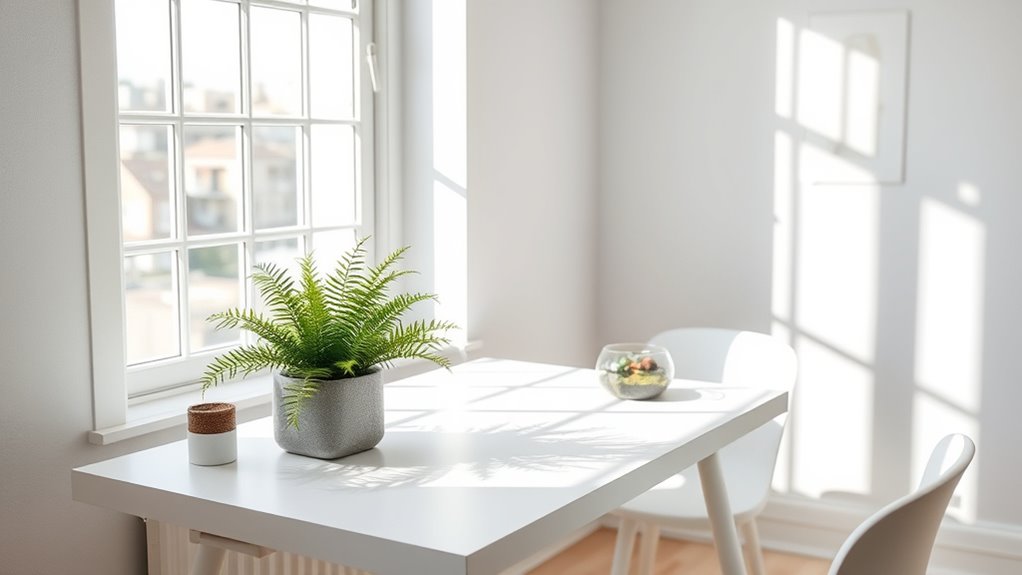

To add nature to your workspace without clutter, focus on simple, clean design with natural elements like plants, natural materials, and water features. Choose low-maintenance plants like succulents, arrange them thoughtfully, and use eco-friendly materials such as reclaimed wood and stone. Keep furniture minimal and select soft colors and warm lighting to create a calming environment. When you pay attention to space, light, and natural textures, you’ll craft a peaceful, inspiring space that promotes focus. If you continue to explore, you’ll discover how to perfect this balance.
Key Takeaways
- Incorporate a few carefully selected low-maintenance plants like succulents in simple, stylish containers to enhance natural beauty without clutter.
- Use natural materials such as reclaimed wood, stone, and bamboo in furniture and decor for an authentic, minimalist feel.
- Maximize open space by minimizing furniture and emphasizing natural light to create a calm, uncluttered environment.
- Add subtle water features or wall-mounted planters to introduce soothing natural elements without overwhelming the workspace.
- Focus on cohesive color schemes with earthy tones and soft greens, complemented by warm lighting to evoke tranquility and balance.
Understanding the Principles of Biophilic Minimalism
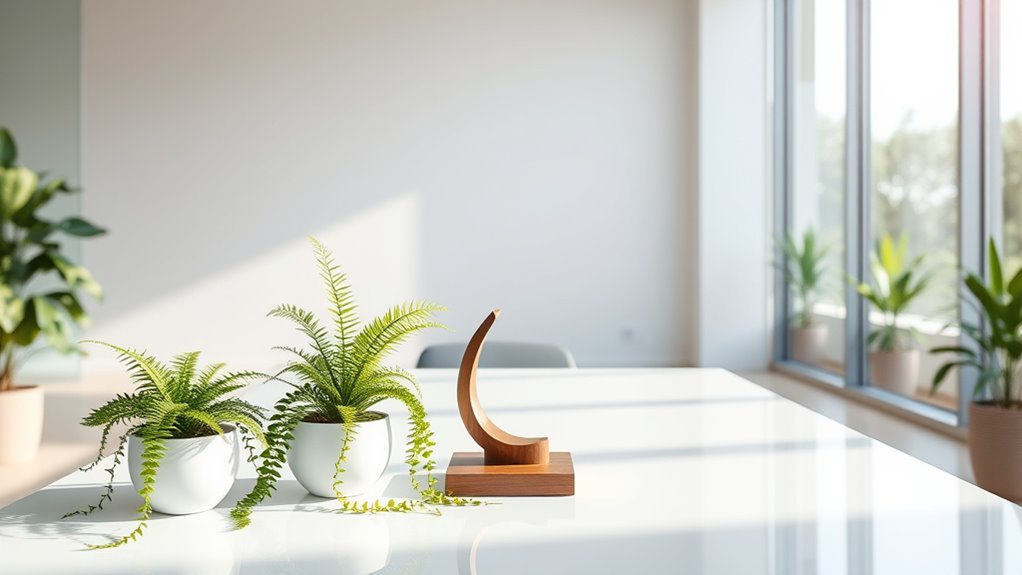
To understand the principles of biophilic minimalism, you need to recognize how it combines the natural world with simple, uncluttered design. This style emphasizes clean lines and open spaces, avoiding excessive decoration or synthetic decor that feels out of place. Instead, it integrates natural elements to foster calm and focus. Artificial lighting is carefully chosen to mimic natural light, enhancing the connection to nature without overwhelming your space. You avoid overly bright or harsh lighting setups that disrupt tranquility. Instead, you prioritize subtle, warm illumination that supports a peaceful environment. By balancing minimalism with natural influences, you create a workspace that feels both serene and inspiring, encouraging productivity while maintaining a clutter-free aesthetic. Incorporating wall organization systems with aesthetic appeal can further enhance your space’s harmony and functionality. Additionally, understanding cultural intelligence helps in designing environments that resonate with diverse preferences and sensory sensitivities, ensuring your workspace remains inclusive and adaptable. Practicing mindful decluttering can help sustain this balance by reducing unnecessary items and supporting a harmonious environment. Moreover, paying attention to the environmental considerations of your workspace can promote sustainability and eco-consciousness in your design choices.
Selecting the Right Natural Elements for Your Workspace
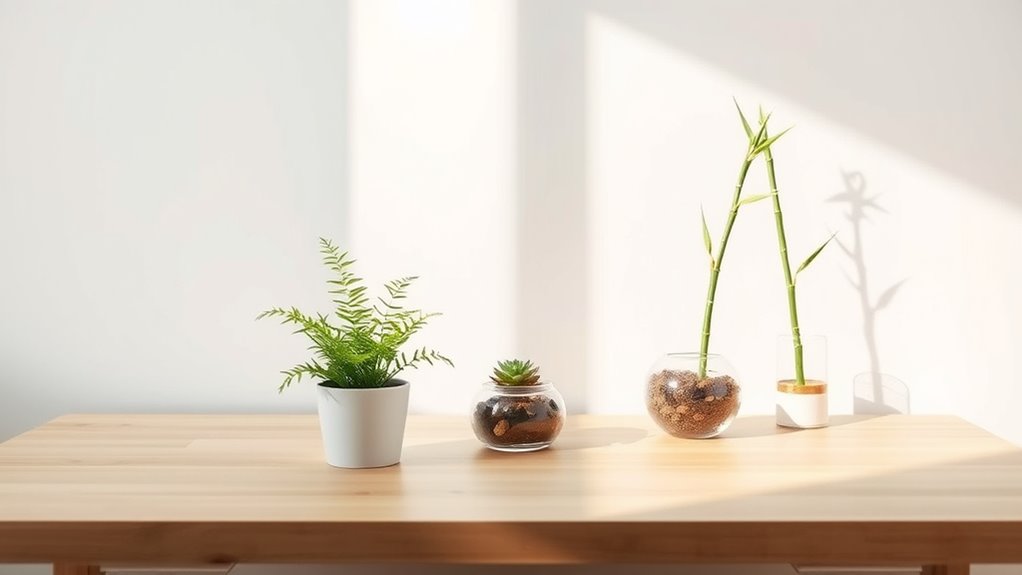
Choosing the right natural elements can transform your workspace into a calming retreat. Focus on selecting ideal plants, natural materials, and water features that fit your space and style. By making thoughtful choices, you’ll create an environment that promotes well-being and productivity. Incorporating unique and wicked planters can further elevate your indoor aesthetics and reflect your personal style.
Ideal Plant Choices
Ever wondered which plants can thrive in your workspace without demanding too much attention? Succulent varieties are perfect—they require minimal watering and care, making them ideal for busy environments. These hardy plants add a touch of greenery without cluttering your space or needing frequent maintenance. Floral arrangements crafted with simple, low-maintenance blooms can also enhance your workspace’s natural feel without becoming overwhelming. Choose plants that don’t need direct sunlight or constant watering, such as jade plants or aloe vera. Avoid high-maintenance options like ferns or orchids that may require more attention. Incorporating natural materials like wood or linen in your plant containers or decor can further enhance the biophilic aesthetic. Additionally, selecting plants with low light requirements ensures they stay healthy in various workspace lighting conditions. Understanding plant care tips can help you maintain a thriving, clutter-free environment. For optimal health, choosing air-purifying plants can contribute to improved indoor air quality and reduce allergens. By selecting these easy-care plants, you create a calming, natural atmosphere that boosts productivity while keeping your workspace clutter-free and visually appealing.
Natural Material Options
Incorporating natural materials into your workspace can create a calming and authentic environment that enhances focus and well-being. To achieve this, choose elements that reflect nature’s simplicity and beauty. Consider materials like reclaimed wood for desks or shelving, which adds warmth and texture. Incorporate stone accents or planters made from clay to evoke the natural landscape. You can also add botanical art featuring leaves, flowers, or scenes from urban jungles to bring the outdoors inside without clutter. These choices blend seamlessly with minimalist design, creating a balanced atmosphere. Additionally, selecting natural textures can further enrich the sensory experience of your space. Employing cost-effective strategies like sourcing reclaimed or recycled materials can also help maintain your budget while creating an eco-conscious workspace. Incorporating innovative sustainable materials can further enhance the eco-friendly aspect of your design. Incorporating sustainable and eco-friendly options can also contribute to a more eco-conscious workspace. By selecting natural materials thoughtfully, you craft a space that feels grounded and inspiring, supporting both productivity and tranquility. This approach makes your workspace a true reflection of nature’s understated elegance.
Incorporating Water Features
Have you considered how a water feature can transform your workspace into a calming oasis? The gentle water movement creates soothing sounds that reduce stress and increase focus. Choosing the right aquatic aesthetics, like a small tabletop fountain or a sleek wall-mounted waterfall, adds a natural element without cluttering your space. Opt for designs with clean lines and minimalistic features to keep your workspace uncluttered. The visual appeal of flowing water enhances your environment’s tranquility while introducing a dynamic natural element. Remember, the goal is to create a balanced, harmonious atmosphere. Carefully selected water features can serve as a focal point that promotes relaxation and inspires creativity, all while maintaining the simplicity characteristic of biophilic minimalism. Regular maintenance, such as cleaning and inspecting the water system, can extend the life of your water feature and ensure it remains a serene addition to your workspace waterproofing process. Additionally, understanding the importance of halal certification when choosing water features or related products can ensure your workspace aligns with your personal or community standards. Incorporating natural elements thoughtfully can further elevate your workspace’s calming effect and support safe water usage practices.
Incorporating Plants With Purpose and Precision
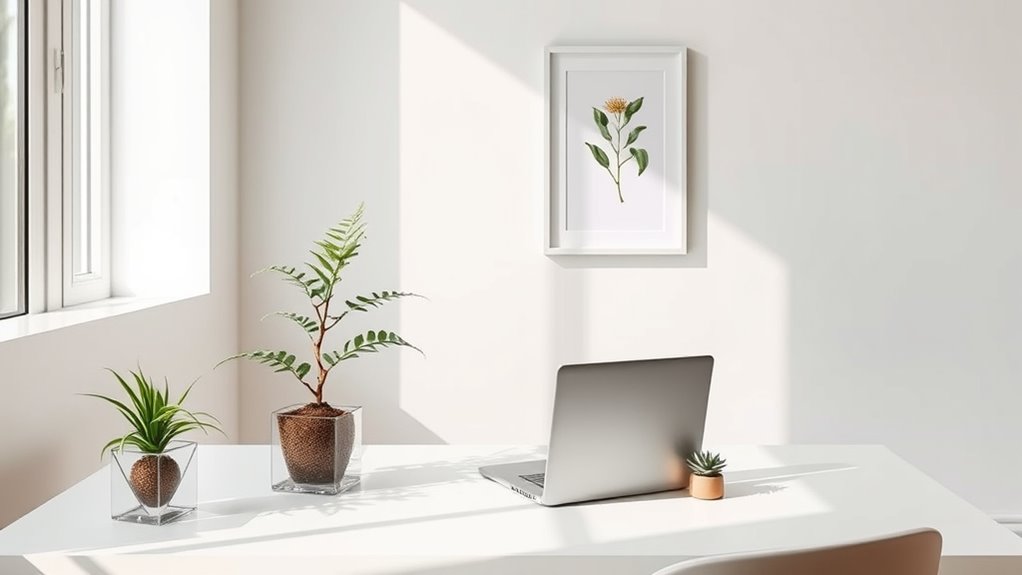
To create a purposeful and balanced space, you need to select plants that serve both aesthetic and functional roles. Indoor gardening benefits from strategic plant placement techniques that maximize space and health. Focus on plants that purify air, reduce stress, or boost productivity. For example:
- Place low-maintenance succulents on your desk for minimal clutter and visual calm.
- Position taller plants like snake plants near windows to improve air quality.
- Use hanging planters or wall-mounted options to save space and create visual interest.
- Incorporating vetting quality honey or other natural products can also enhance the ambiance and wellness benefits of your workspace. Additionally, choosing plants with air-purifying properties can further improve indoor air quality and support a healthier environment. Employing plant placement techniques aligned with the principles of biophilic design can optimize the mental and physical benefits of your workspace.
Choosing Minimalist Furniture That Complements Nature-Inspired Decor

Choosing minimalist furniture that complements nature-inspired decor involves selecting pieces with clean lines, neutral tones, and simple forms that enhance rather than overpower your space. Focus on ergonomic seating that offers comfort without bulk, blending seamlessly into your environment. Opt for furniture made from natural materials like wood or bamboo to reinforce the biophilic theme. Keep decorative accents subtle—think textured throws, woven baskets, or stone sculptures—that add visual interest without clutter. The goal is to create a calm, functional workspace where every piece feels intentional. Incorporating sustainable materials ensures your furniture aligns with sustainable practices and reinforces the natural aesthetic. Emphasizing workplace ergonomics contributes to your overall well-being and productivity in a minimalist setting. Utilizing self watering plant pots can also help maintain a lush, green ambiance effortlessly, supporting the biophilic design. Paying attention to natural lighting can significantly enhance the calming atmosphere and prevent your space from feeling confined. By harmonizing sleek, understated furniture with nature-inspired elements, you foster a serene atmosphere that encourages focus and relaxation. This approach guarantees your workspace remains minimalist yet inviting, seamlessly integrating natural beauty.
Balancing Open Space and Natural Features for Calmness

Creating a sense of calm in your space often hinges on how well you balance open areas with natural features. Zen inspired layouts emphasize simplicity and spaciousness, helping your mind relax. Incorporate acoustic natural elements like flowing water or wind chimes to enhance tranquility without clutter. To achieve harmony, consider these approaches:
Balance open spaces with natural elements to create a calming, clutter-free, and serene environment.
- Leave plenty of open space to prevent clutter and promote mental clarity
- Integrate natural features, such as potted plants or a small indoor fountain, for soothing visual and auditory stimuli
- Use minimal furniture to maintain an airy feel, allowing natural elements to stand out
This balance fosters calmness and mindfulness, making your workspace a peaceful refuge that nurtures focus and well-being.
Using Color and Light to Enhance Natural Connections
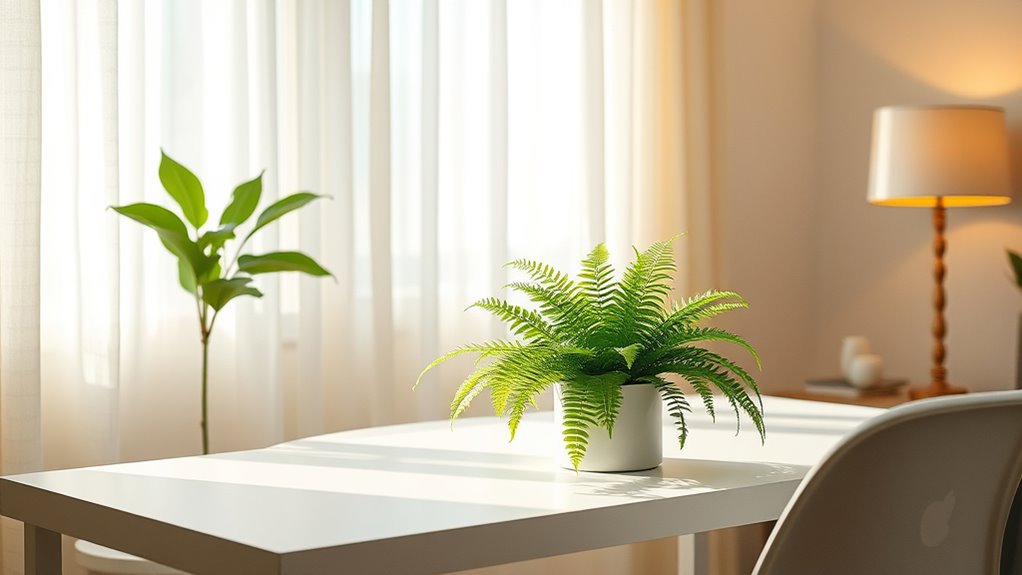
By carefully selecting colors and lighting, you can strengthen your space’s connection to nature and deepen its calming effect. Use color psychology to choose hues that evoke serenity, such as soft greens, calming blues, or earthy neutrals. Lighting techniques like natural light or warm LED bulbs create a cozy, inviting atmosphere that mimics daylight. Bright, cool lighting can energize a workspace, while dimmer, warm tones foster relaxation. Incorporate these approaches with intentional placement to highlight natural features and create a harmonious environment. Here’s a quick guide:
| Color Psychology | Lighting Techniques |
|---|---|
| Green for renewal and calm | Use large windows for natural light |
| Blue for tranquility | Add warm LED bulbs for cozy glow |
| Earth tones for grounding | Use diffusers to soften harsh light |
| Neutral shades for balance | Incorporate task lighting strategically |
Maintaining Simplicity: Avoiding Clutter in a Nature-Inspired Space
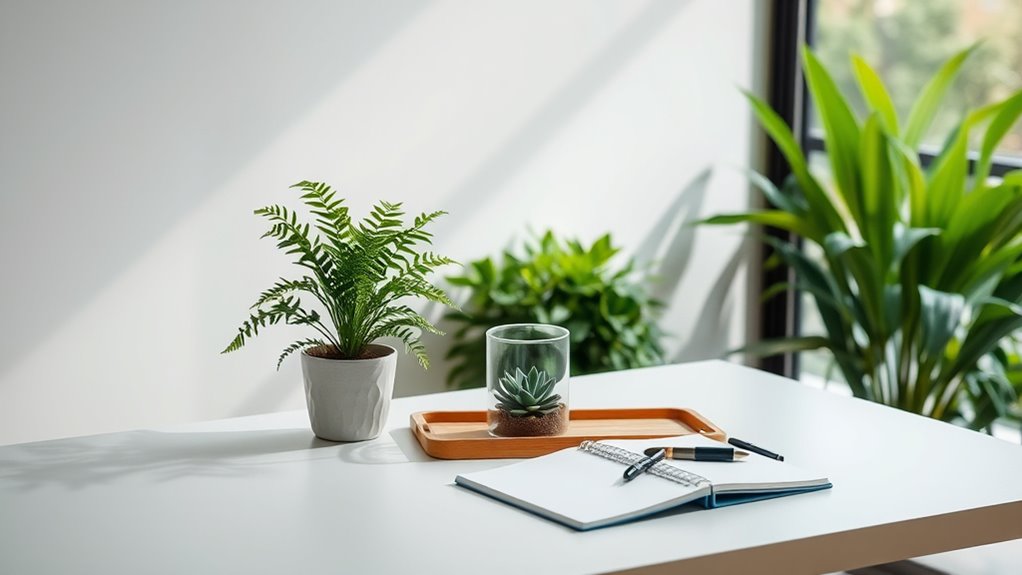
To keep your space feeling calm and connected to nature, choose only a few well-placed plants that complement your environment. Use natural materials like wood, stone, or bamboo to add texture without cluttering the space. Staying intentional with your selections helps maintain a simple, serene, and inviting atmosphere.
Selective Plant Choices
Choosing plants thoughtfully is essential to maintaining a clutter-free, serene space inspired by nature. Focus on selecting a few, well-chosen plants that enhance your environment without overwhelming it. Opt for succulent varieties with interesting leaf patterns, which add visual appeal while requiring minimal maintenance. When selecting, consider plants that complement each other and your workspace’s aesthetic, avoiding overly busy or tall varieties that can create visual clutter.
- Succulent varieties with unique leaf patterns for subtle texture
- Compact plants that fit comfortably on your desk or shelves
- Low-maintenance options to keep your space feeling calm and organized
Use of Natural Materials
In a nature-inspired space, using natural materials helps create a sense of calm and authenticity without adding visual clutter. Focus on sustainable sourcing to guarantee your materials are eco-friendly and ethically obtained. Emphasize natural material textures like rough wood, smooth stone, or woven fibers to add tactile interest without overwhelming the space. Keep your selections simple and cohesive, avoiding excessive ornamentation.
| Natural Material | Meaning |
|---|---|
| Reclaimed Wood | Sustainability and history, warmth and character |
| Linen or Cotton | Light, breathable textures that evoke calm |
| Stone | Durability, grounding, natural strength |
| Bamboo | Fast-growing, eco-friendly, versatile |
| Jute or Wool | Soft textures adding comfort without clutter |
Tips for Caring for Your Natural Elements to Keep Them Fresh

Keeping your natural elements fresh requires a little care and attention. To maintain vibrant plants, focus on soil health by regularly checking moisture levels and adding organic compost when needed. Proper plant propagation ensures healthy growth and fewer diseases, so prune dead or yellowing leaves and encourage new shoots. Additionally, monitor humidity and light conditions to mimic their natural environment.
To keep your workspace lively, remember:
- Water your plants consistently, avoiding overwatering or drought stress
- Repot when roots become crowded to promote healthy soil contact
- Remove dust from leaves gently to maximize photosynthesis
These simple steps help your natural elements stay fresh and thriving, creating a calming, inspiring environment.
Creating a Harmonious and Inspiring Environment Every Day
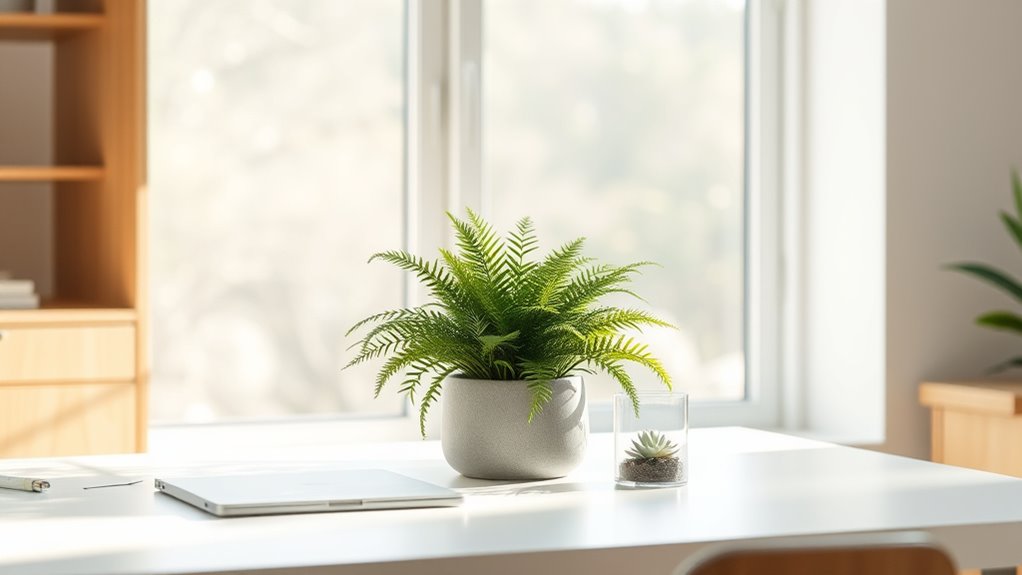
Maintaining healthy, vibrant natural elements sets the foundation for a space that feels peaceful and inspiring. Incorporate biophilic design principles to enhance your environment daily, emphasizing natural light, plants, and organic textures. Keep clutter at bay to foster workspace serenity, allowing your natural elements to stand out and promote focus. Place plants where they catch your eye and tend to them regularly to keep their vitality alive. Use calming colors inspired by nature to create a soothing atmosphere. Add personal touches like nature-inspired artwork or subtle scents to deepen your connection with the outdoors. By intentionally designing your space with these elements, you create a harmonious environment that motivates and refreshes you every day, making your workspace a true sanctuary.
Frequently Asked Questions
How Can I Incorporate Biophilic Minimalism in a Small Workspace?
To incorporate biophilic minimalism in your small workspace, start by adding a few indoor plants that thrive in your space, like succulents or pothos. Maximize natural lighting by positioning your desk near windows or using sheer curtains. Keep clutter at bay with simple storage solutions, allowing the natural elements to stand out. This balance of greenery and light promotes calmness and boosts productivity without overwhelming your limited space.
What Are Cost-Effective Ways to Add Natural Elements?
Think of your workspace as a blank canvas waiting for a touch of nature. You can craft budget-friendly greenery with DIY projects like repurposing jars for small plants or creating wall-mounted planters from recycled materials. Incorporate low-cost elements like air plants or succulents, which require minimal care. These simple, affordable ideas bring a refreshing gust, transforming your space into a calming green oasis without breaking the bank.
How Often Should I Update or Replace Natural Decor?
You should update or replace your natural decor every few months, aligning with seasonal adjustments and maintaining freshness. Regular maintenance frequency, like watering plants weekly and cleaning natural elements monthly, helps keep them vibrant. For seasonal decor, swap out items as seasons change—spring blooms, summer greenery, autumn leaves, and winter accents—to keep your workspace lively and inspiring throughout the year.
Can Biophilic Minimalism Work in a Shared or Office Environment?
Yes, biophilic minimalism can work in shared or office environments. You can incorporate natural elements through collaborative design, such as shared plant displays or natural light enhancements. Keep it simple and clutter-free, focusing on a few key pieces that promote well-being without overwhelming the space. This approach fosters a calming atmosphere, boosts productivity, and encourages teamwork while maintaining a clean, minimalist aesthetic.
What Are Common Mistakes to Avoid When Designing a Nature-Inspired Workspace?
Think of your workspace as a garden; avoid overcrowding clutter that stifles growth and neglects natural balance. Don’t overload with too many plants or decor, which can create chaos instead of harmony. Keep it simple and intentional, allowing each element to breathe. Remember, a well-balanced space nurtures creativity. By avoiding these mistakes, you’ll foster a calm, inspiring environment that feels alive without feeling overwhelming.
Conclusion
By embracing biophilic minimalism, you turn your workspace into a sanctuary where nature and simplicity dance in harmony. Think of it as planting seeds of calm that grow into a lush landscape of productivity and peace. Keep your space thoughtfully curated, and let the natural elements breathe life into every corner. With mindful care and intentional design, you’ll create an environment that feels as invigorating as a walk in the woods—grounding, inspiring, and endlessly revitalizing.