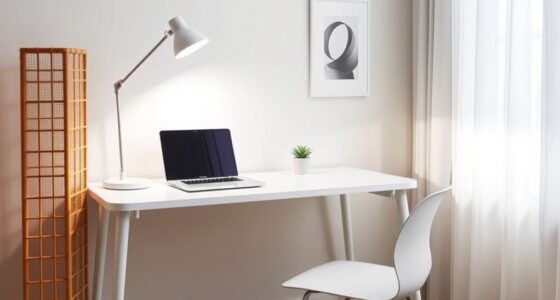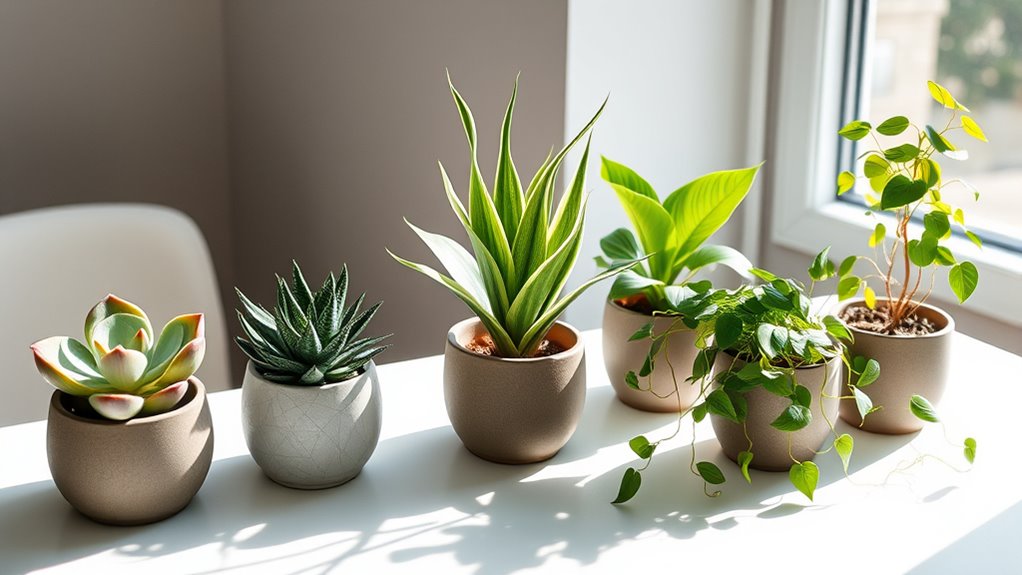

To add life to your workspace without the mess, choose low-maintenance plants like snake plants, pothos, ZZ plants, spider plants, and peace lilies. These hardy options tolerate low light and infrequent watering, making them perfect for busy environments. Position them where they get indirect sunlight, use well-draining soil, and keep watering simple. If you want practical tips to keep these plants thriving with minimal effort, keep exploring for more insights.
Key Takeaways
- Choose resilient plants like snake plants, pothos, and ZZ plants that tolerate low light and infrequent watering.
- Place plants where they receive indirect sunlight, such as desks or shelves, to prevent mess and avoid direct sun damage.
- Use well-draining soil and containers with drainage holes to minimize overwatering and root rot risks.
- Regularly dust leaves with a damp cloth and water only when the topsoil feels dry to keep maintenance minimal.
- These low-maintenance plants enhance workspace aesthetics effortlessly while requiring minimal care.
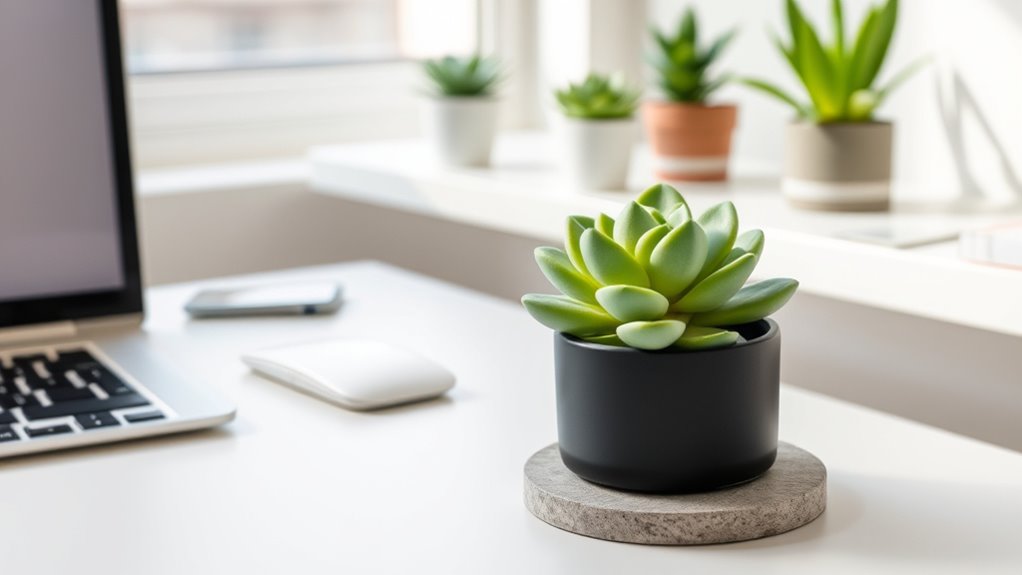
Creating a green and inviting workspace doesn’t have to be a hassle, especially if you choose low-maintenance plants. These plants are perfect for busy environments or for anyone who wants to add a touch of nature without the stress of constant upkeep. When decorating with greenery, selecting the right plants is essential—they should thrive in your specific conditions and require minimal attention. With a few simple plant care tips, you can enjoy the beauty of greenery without worrying about overwatering or neglect.
Start by choosing plants that are naturally resilient and suited to indoor environments. Snake plants, pothos, and ZZ plants are excellent options because they tolerate low light levels and infrequent watering. For example, snake plants only need to be watered every few weeks, and they can survive in indirect light, making them ideal for office settings. When decorating with greenery, think about placement—position these plants where they’ll get some indirect sunlight but won’t be in the way of daily tasks. You can add a small snake plant on your desk or a pothos hanging from a shelf to create a lively, fresh vibe.
Plant care tips for low-maintenance plants involve simple routines. Most of these plants prefer well-draining soil and should be watered only when the top inch of soil feels dry. Overwatering is a common mistake, so check moisture levels before watering. Also, avoid exposing these plants to direct sunlight, which can scorch their leaves. A spot near a window with filtered light works perfectly. Regularly dusting the leaves with a damp cloth helps the plants breathe and keeps them looking vibrant. Fertilize sparingly, about once every few months, with a diluted houseplant fertilizer to keep them healthy without overdoing it. Additionally, understanding contrast ratio can help you choose plants and lighting that highlight their colors and textures effectively.
Decorating with greenery isn’t just about placing plants in empty corners—it’s about creating a cohesive look that enhances your workspace. Use plant stands, decorative pots, or wall-mounted planters to add visual interest. Grouping plants of different heights and textures can create a dynamic display that’s easy to maintain. Choose containers with a drainage hole to prevent water from accumulating, which can lead to root rot. Keep in mind that low-maintenance plants are forgiving, so even if you forget a watering or two, they’re likely to bounce back, making your decorating efforts more rewarding.

Logitech G413 SE Full-Size Mechanical Gaming Keyboard - Backlit Keyboard with Tactile Mechanical Switches, Anti-Ghosting, Compatible with Windows, macOS - Black Aluminum
Take your gaming skills to the next level: The Logitech G413 SE is a full-size keyboard with gaming-first...
As an affiliate, we earn on qualifying purchases.
Frequently Asked Questions
Do Low-Maintenance Plants Improve Air Quality?
Yes, low-maintenance plants can improve air quality through air purification, removing toxins and releasing oxygen. They’re easy to care for, ensuring a longer plant lifespan, which means ongoing benefits. You don’t need to worry about frequent watering or complex care routines. As a result, your workspace stays fresher and healthier, creating a more pleasant environment without the hassle of high-maintenance upkeep.
How Often Should I Water These Low-Maintenance Plants?
Imagine you’ve just brought home a snake plant; you’ll want to water it every 2-3 weeks, depending on your environment. For low-maintenance plants, the key plant care tips include watering frequency that matches their needs—usually when the top inch of soil feels dry. Don’t overwater, as it can cause root rot. Stick to this simple schedule, and your plants will thrive with minimal effort.
Are These Plants Safe for Pets in the Workspace?
You should choose pet-safe plants to avoid toxic plant concerns in your workspace. Many low-maintenance options like spider plants, areca palms, and Boston ferns are non-toxic and safe for pets. Always double-check specific plant labels or consult reliable resources to guarantee your plants are pet safe. This way, you can enjoy a lively workspace without worrying about accidental poisoning or toxic plant concerns affecting your furry friends.
Can These Plants Tolerate Low Light Conditions?
Think of these plants as resilient friends who thrive in shade tolerance and drought resistance. Yes, they can tolerate low light conditions, much like a cactus survives in a desert with minimal water. For example, snake plants and pothos are perfect for dim corners, needing only occasional watering. They actively adapt, making your workspace lively without demanding much light or maintenance. You’ll enjoy a green touch even in the darkest office spots!
What Are the Best Plants for Small Office Spaces?
For small office spaces, you should choose indoor greenery that fits comfortably without cluttering. Opt for compact plants like succulents, pothos, or snake plants, which thrive in limited space. Proper plant placement is key; keep plants on desks or shelves where they receive indirect light. These low-maintenance options add life to your workspace, improve air quality, and require minimal care, making them perfect for tight quarters.

Arteck 2.4G Wireless Keyboard Stainless Steel Ultra Slim Full Size Keyboard with Numeric Keypad for Computer/Desktop/PC/Laptop/Surface/Smart TV and Windows 10/8/ 7 Built in Rechargeable Battery
Easy Setup: Simply insert the nano USB receiver into your computer and use the keyboard instantly.
As an affiliate, we earn on qualifying purchases.
Conclusion
Adding low-maintenance plants to your workspace can boost your mood and productivity without the hassle. Did you know that just having greenery around can increase focus by 15%? With these easy-care options, you’ll enjoy the benefits of nature without the mess or extra effort. So go ahead, choose a few of these plants, and transform your workspace into a lively, invigorating environment you’ll love to spend time in every day.
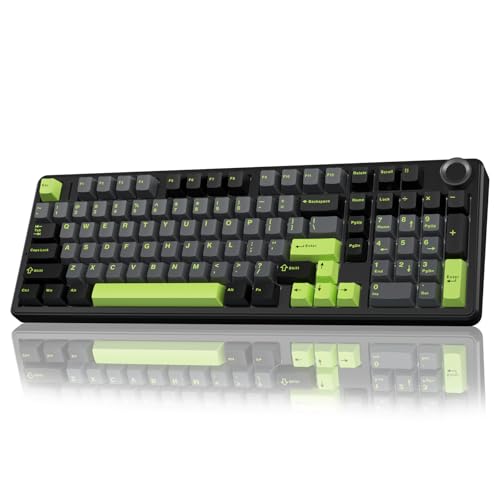
AULA F99 Pro Wireless Mechanical Keyboard with Knob,Creamy Sound,Tri-Mode BT5.0/USB-C/2.4GHz Hot Swappable Keyboard,Gasket Structure,RGB Backlit Computer Gaming Keyboards
Multi-Device Connection: AULA F99 Pro wireless mechanical keyboard provides three connection methods, including BT5.0, 2.4GHz wireless mode, and...
As an affiliate, we earn on qualifying purchases.

RK ROYAL KLUDGE S98 Mechanical Keyboard w/Smart Display & Knob, Top Mount 96% Wireless Mechanical Keyboard BT/2.4G/USB-C, Hot Swappable, Software Support, Creamy Sounding, 98 Keys
Big Features on a Small Screen - Is there anything it can't display? Custom gif image, date. connection...
As an affiliate, we earn on qualifying purchases.