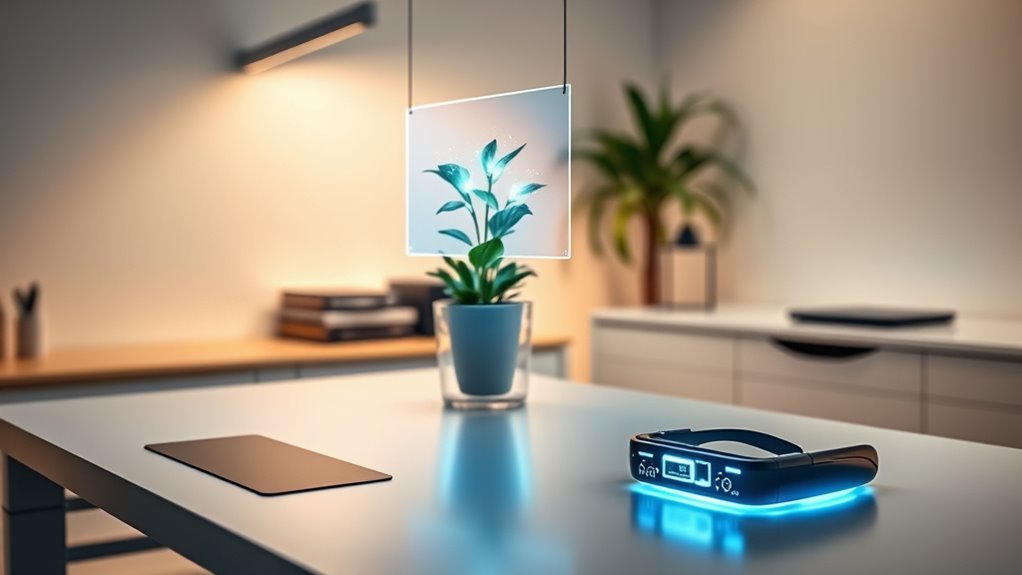

Biohacking your workspace isn’t just a fad—it’s a practical way to boost productivity, health, and focus. By optimizing your environment through ergonomic furniture and better lighting, you support your body and mind, making work easier and more enjoyable. Small adjustments can have big benefits, helping prevent strain and fatigue. If you want to discover how simple tweaks can transform your daily routine and give you a lasting edge, keep exploring these strategies.

Get your wardrobe favorites delivered free — and shop member deals
- Fast, free delivery on millions of items
- Access to Prime Big Deal Days deals on October 6–7
- Prime Video, Amazon Music and more included
Key Takeaways
- Ergonomic furniture and proper lighting are proven strategies that enhance focus, comfort, and overall health, supporting long-term productivity.
- Simple workspace adjustments, like adjustable chairs and natural light, offer immediate benefits without relying on fads.
- Designed environments influence mood and cognitive function, making them a strategic investment rather than a passing trend.
- While some biohacking techniques may be gimmicks, optimizing your workspace is a sustainable, evidence-based approach to productivity.
- Long-term benefits include reduced physical strain, better sleep, and sustained mental clarity, confirming workspace biohacking as a valuable frontier.
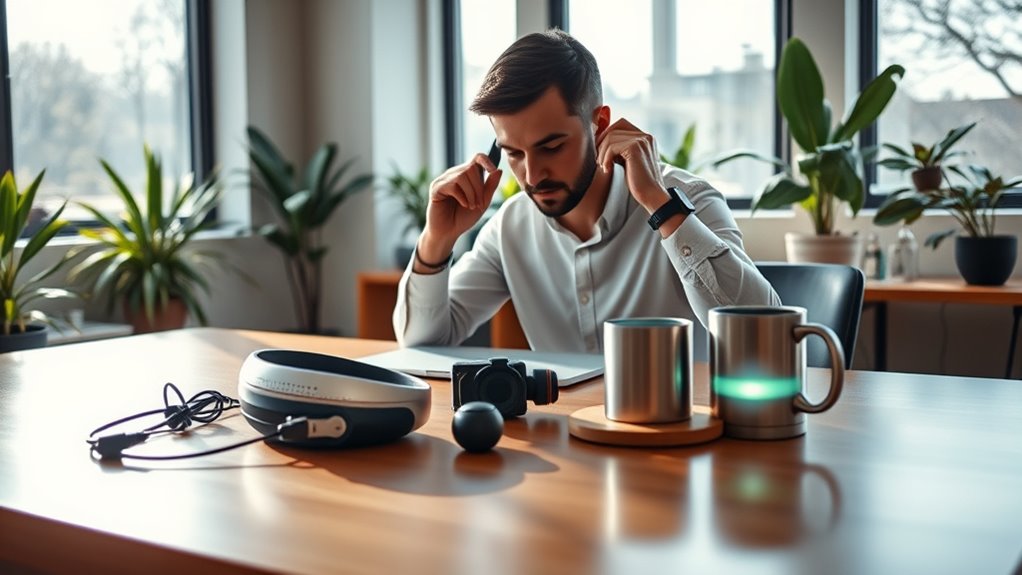
Creating an ideal workspace is essential for boosting your productivity and well-being. When you design your environment with purpose, you set the stage for better focus, reduced fatigue, and overall job satisfaction. Two critical elements to contemplate are ergonomic furniture and ambient lighting. These components aren’t just about comfort; they influence your physical health and mental clarity. Prioritizing ergonomic furniture means investing in a desk and chair that support proper posture, preventing aches and long-term injuries. An adjustable chair that encourages natural spinal alignment and a desk that keeps your monitor at eye level can make a significant difference. When your body feels supported, you stay more engaged and less distracted by discomfort. Alongside this, ambient lighting plays a crucial role. Instead of harsh fluorescent lights, opt for soft, natural light sources that mimic daylight. This kind of lighting reduces eye strain and refreshes your alertness, especially during long work sessions. If natural light isn’t enough, supplement with warm LED bulbs or smart lighting solutions that can be adjusted throughout the day. The goal is to create a bright yet comfortable environment that energizes you without causing glare or fatigue. When you combine ergonomic furniture with ambient lighting, you’re crafting a space that promotes sustained concentration and physical health. This setup not only minimizes strain but also helps regulate your circadian rhythms, improving sleep and overall vitality. It’s tempting to overlook these details in favor of more high-tech biohacks, but small ergonomic adjustments and good lighting are often the most effective foundation. They’re simple to implement and yield immediate benefits. As you set up your workspace, pay attention to how these elements influence your mood and productivity. Notice if your posture improves and if your eyes feel less tired. Adjust your lighting to find the perfect balance that keeps you alert without overwhelming your senses. When your environment supports your body and mind, you’re more likely to stick with healthy habits and stay motivated. Remember, biohacking isn’t just about exotic gadgets or supplements; it’s about optimizing your everyday surroundings to work for your biology. By making these thoughtful changes, you’ll find it easier to stay focused, reduce stress, and maintain energy levels throughout the day. In the end, a well-designed workspace isn’t a fad—it’s a strategic investment in your long-term performance and well-being. When you take the time to create an ergonomic, well-lit environment, you’re setting yourself up for sustained success and a healthier, more productive work life. Paying attention to ergonomic principles helps prevent strain and injury, ensuring your workspace supports your health over time.
Frequently Asked Questions
What Are the Potential Health Risks of Workspace Biohacking?
You might face health risks from workspace biohacking if you ignore proper workplace ergonomics or skip ergonomic assessments. Poorly adjusted ergonomic setups can cause strain, repetitive stress injuries, or discomfort. Overusing tech gadgets or supplements without guidance may also lead to health issues. To stay safe, prioritize ergonomic assessments and make certain your workspace supports your health, avoiding shortcuts that could compromise your well-being.
Is There Scientific Evidence Supporting Workspace Biohacking Benefits?
Scientific validation for workspace biohacking benefits is limited, as empirical research remains scarce. While some studies suggest improvements in focus, mood, and productivity from certain interventions, much of the evidence is anecdotal or preliminary. You should approach these claims with caution, recognizing that more rigorous research is needed to confirm definitive benefits. Ultimately, individual experiences vary, and it’s wise to rely on scientifically supported methods for optimizing your workspace.
How Much Does Implementing Biohacking in the Office Cost?
Implementing biohacking in your office costs vary based on your goals and budget considerations. A cost analysis shows that simple upgrades like ergonomic chairs or better lighting are affordable, typically under a few hundred dollars. More advanced biohacking tools, such as sleep trackers or neurofeedback devices, can range from hundreds to thousands. You should weigh these expenses against potential productivity gains to make informed decisions aligned with your budget.
Can Biohacking Improve Mental Well-Being or Only Productivity?
Imagine a garden blossoming with vibrant colors—that’s how biohacking can enhance your mental well-being. Yes, it improves mental health and emotional well-being by reducing stress, boosting focus, and fostering resilience. When you optimize your environment and habits, you nurture your mind’s growth, just like tending to a garden. So, biohacking isn’t just about productivity; it’s about cultivating a healthier, happier mental state.
What Are the Privacy Concerns Related to Biohacking Devices?
You should be aware that biohacking devices raise serious privacy concerns. They collect sensitive data, making Data privacy and Data security vital issues. If you don’t safeguard your information, hackers could access personal health details or manipulate device functions. Always review privacy policies, use strong passwords, and keep firmware updated to protect your data. Being proactive helps guarantee your biohacking journey remains secure and your personal information stays private.
Conclusion
Think of your workspace as a garden—you’re the gardener tending to its every detail. When you biohack wisely, you’re planting seeds of focus, watering with energy, and weeding out distractions. Over time, your efforts bloom into a thriving, productive environment. But neglect it, and weeds of fatigue and chaos can take over. So, stay attentive and intentional—because your workspace, like a garden, flourishes when carefully cultivated.
Halloween Picks
halloween
As an affiliate, we earn on qualifying purchases.