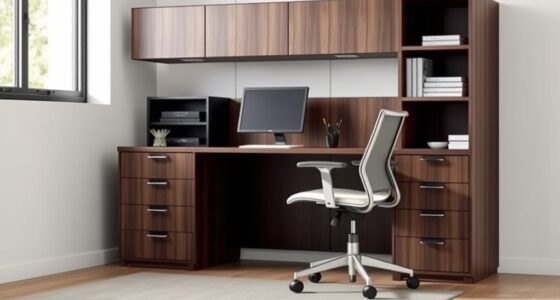
To build a stylish, minimalist desk, start by selecting eco-friendly materials like reclaimed wood or bamboo for durability and sustainability. Use simple tools to cut and assemble the pieces, focusing on clean lines and functional design, such as adjustable legs or rounded edges for comfort. Finish with non-toxic sealants to protect the surface’s look and longevity. Keep the workspace clutter-free for maximum focus. If you continue exploring, you’ll discover more tips to tailor your perfect, eco-conscious workspace.
Key Takeaways
- Choose eco-friendly, durable materials like reclaimed wood or recycled metal for sustainability and aesthetic appeal.
- Design with ergonomic principles, ensuring appropriate height, minimal clutter, and rounded edges for comfort.
- Use basic tools to securely assemble the tabletop with sturdy supports, emphasizing simplicity and functionality.
- Apply non-toxic, eco-friendly finishes to protect materials and enhance the workspace’s sleek, minimalist look.
- Organize essentials within reach to create a clutter-free environment that promotes focus and productivity.

Are you looking to create a clean and functional workspace without breaking the bank? Building a DIY minimalist desk is a perfect way to achieve that, especially when you focus on using sustainable materials and an ergonomic design. Not only will you end up with a stylish and practical piece, but you’ll also feel good about choosing eco-friendly options. The first step is to select materials that are both durable and environmentally responsible. Reclaimed wood, bamboo, or recycled metal can serve as excellent choices, giving your desk a unique character while reducing waste. These sustainable materials are often affordable and easy to work with, making them ideal for a DIY project. Incorporating energy-efficient design principles can further enhance your workspace’s sustainability and reduce your overall environmental impact.
Once you’ve gathered your materials, pay close attention to ergonomic design. Your goal should be to craft a workspace that promotes comfort and productivity. Measure your space carefully and determine the best height for your desk, typically around 28 to 30 inches, to match your chair and ensure proper posture. Consider adding a slight incline or rounded edges to minimize strain on your wrists and neck. Keep your workspace free of clutter by designing enough surface area for your essentials, but avoid overloading it. A minimalist approach helps maintain focus and reduces distractions, making your workspace more efficient.
Design your workspace for comfort with the right height, gentle angles, and clutter-free minimalism.
When assembling your desk, keep the design simple and clean. Use basic tools like a saw, drill, and sandpaper to cut and smooth your materials. If you’re working with reclaimed wood, make sure to clean and treat it properly before assembly. Attach the tabletop securely to sturdy legs or a frame that you can build from recycled metal pipes or wooden supports. To enhance ergonomic comfort, consider adding adjustable height legs or a removable keyboard tray, giving you flexibility as your needs change. Keep the lines of your design sleek and uncluttered, emphasizing functionality over ornamentation.
Finally, finish your desk with non-toxic, eco-friendly sealants or paints to preserve the materials and add a polished look. This step not only protects your workspace but also aligns with your commitment to sustainability. Once assembled, organize your workspace thoughtfully, keeping essentials within easy reach and leaving plenty of open space to foster clarity and focus. Building your own minimalist desk from sustainable materials with ergonomic principles in mind ensures that your new workspace is both stylish and supportive of your well-being. It’s a rewarding project that combines creativity, practicality, and eco-consciousness, giving you a custom piece you’ll enjoy for years to come.
Frequently Asked Questions
What Tools Are Essential for Building This Desk?
You’ll need a saw, drill, screwdriver, measuring tape, and level to build your desk. These tools help you cut and assemble the wood accurately, ensuring a sturdy, sleek surface. Don’t forget decorative accents like handles or trim to add personality. Also, keep ergonomic considerations in mind by choosing the right height and placement of accessories. With these tools and ideas, you’ll create a functional, stylish workspace tailored to your needs.
How Much Does the Entire Project Cost?
You might find that your total project cost ranges from $50 to $150, depending on your budget planning and material sourcing choices. Investing in quality materials initially can save you money long-term, but sourcing affordable options keeps costs low. Always compare prices and consider second-hand options. By carefully planning your budget and sourcing materials wisely, you can create a stylish minimalist desk without overspending.
Can I Customize the Desk Size Easily?
Yes, you can customize the desk size easily by designing for adjustable dimensions. To optimize space, consider modular components or adjustable legs that allow you to tweak the height and width as needed. This flexibility helps you create a workspace that fits your specific needs and room constraints. With simple modifications, you’ll achieve perfect space optimization, making your desk both functional and tailored to your style.
What Materials Are Best for Durability?
For durability, you should choose materials like solid hardwood, steel, or high-quality plywood, which withstand daily use and heavy loads. These materials also support ergonomic benefits by providing a stable, sturdy surface that promotes good posture. When considering aesthetic considerations, opt for finishes and textures that match your style and workspace vibe. Using durable materials guarantees your desk remains functional and stylish for years to come.
How Long Does the Assembly Process Take?
The assembly timeline for your minimalist desk typically takes around 1 to 2 hours, depending on your experience and the complexity of the design. You’ll find the construction duration is manageable, especially if you organize your tools and follow the step-by-step instructions carefully. Expect to spend some time aligning pieces and tightening screws, but overall, you should complete it efficiently and enjoy your stylish new workspace in just a short afternoon.
Conclusion
Now, your minimalist desk isn’t just a workspace—it’s a blank canvas waiting for your creativity. As you sit down each day, imagine a sleek horizon stretching before you, free of clutter and chaos. With simple materials and a little effort, you’ve crafted a sanctuary that fuels productivity and sparks inspiration. Your new desk isn’t just furniture; it’s a reflection of clarity and purpose, ready to turn your daily tasks into a masterpiece.